Skip to Content
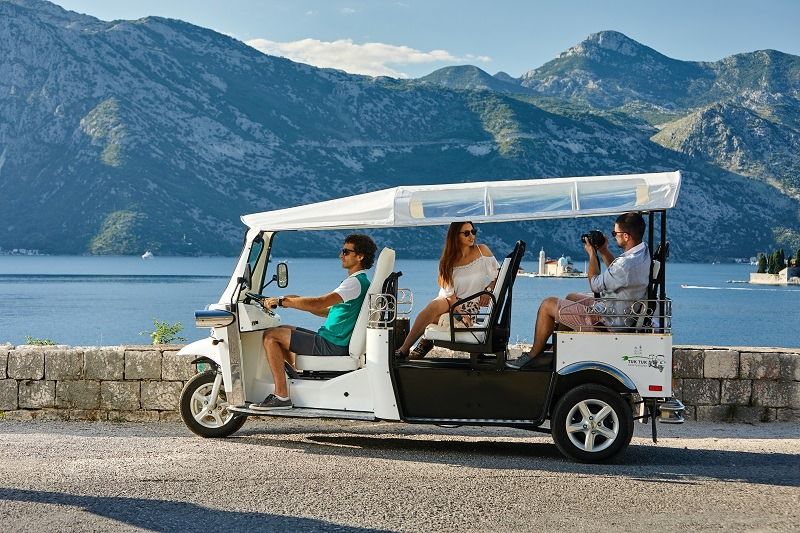
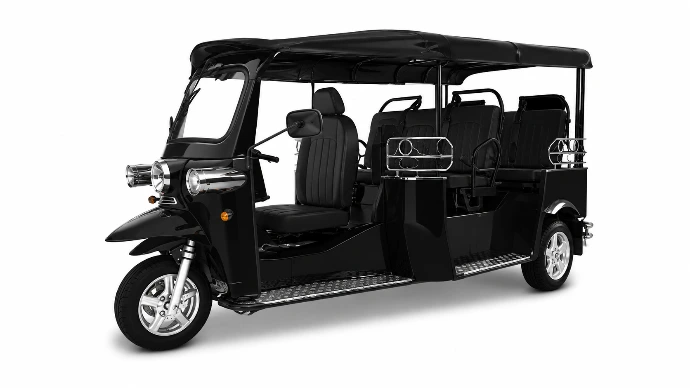
Black eTuk passenger vehicle with premium custom finish

Purpose-led configuration for real operations

Custom Electric Tuk Tuk Builds & Configurations

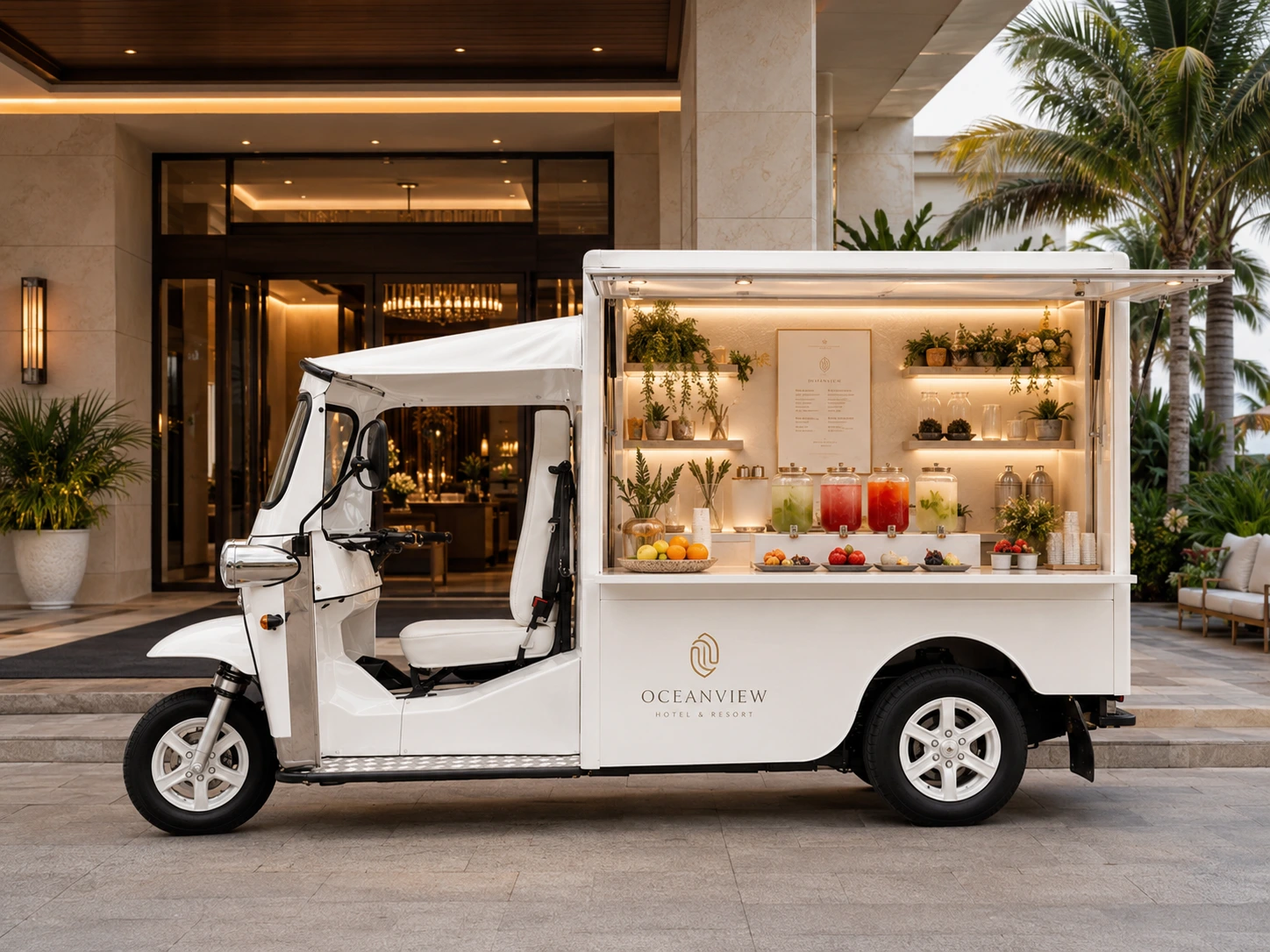
A custom eTuk build adapts an approved Passenger, Cargo or Vendo platform around a defined operating need, such as a specialized service, brand experience, property route, cargo workflow or mobile customer concept. Customization may include layout, equipment, storage, exterior branding, colors, finishes and accessories, subject to platform limits, technical review and the final written specification.

Start with the job Select the platform Review feasibility Define the specification Quote in writing

“Custom” does not mean every requested change is technically feasible, approved or included. eTuk USA must evaluate the exact platform, intended use, load, equipment, energy needs, operating location and applicable requirements before confirming a configuration, price or delivery scope.

1. Functional brief Define the job, users, load, location and daily workflow
2. Platform selection Passenger, Cargo or Vendo direction
3. Technical review Fit, weight, power, water, access and feasibility
4. Written scope Configuration, inclusions, exclusions, price and next step

Direct answer

What is a custom electric tuk tuk build?

A custom eTuk build starts with an existing Passenger, Cargo or Vendo platform and adapts the vehicle around a specific operating job. The final configuration may change body layout, storage, commercial equipment, passenger finish, customer-service areas, electrical loads, branding and accessories, but every change must remain compatible with the platform and approved written specification.

FUNCTION

Job & Workflow

Define who uses the vehicle, what it carries or serves and what happens during a normal operating day.

PACKAGE

Space & Load

Passenger demand, cargo, appliances, storage, clearances and access must fit the selected platform.

ENERGY

Power & Utilities

Vehicle charging and commercial-equipment electrical, water, refrigeration and other utility needs must be reviewed together.

IDENTITY

Brand & Experience

Color, graphics, finishes, signage and presentation can support the customer or property experience.

Choose the base before the build

Customization starts with an approved eTuk platform.

A custom build modifies a platform direction; it does not create unlimited payload, capacity, range, speed or equipment space.

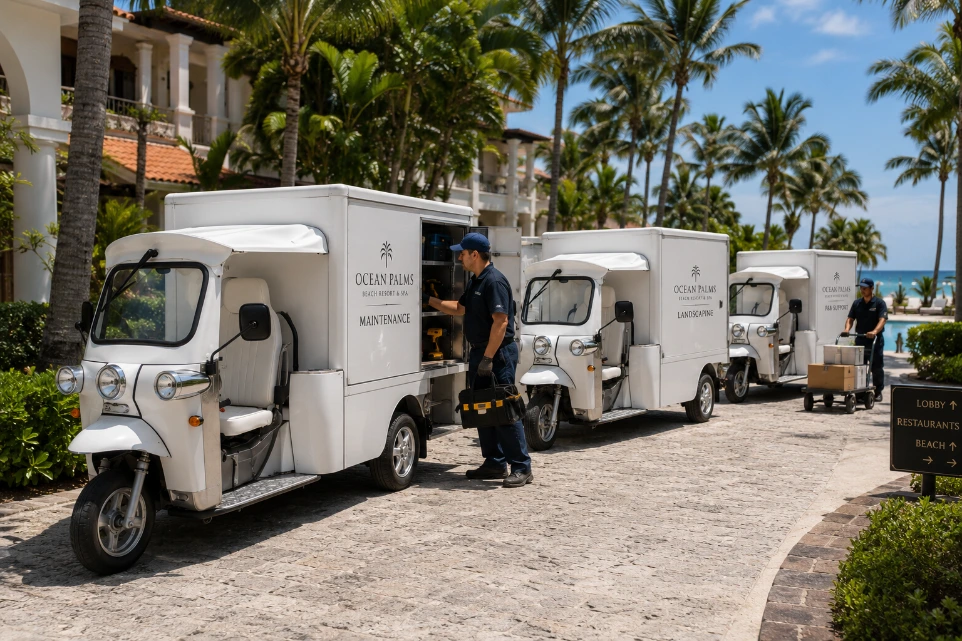
eTuk L5 Cargo commercial vehicle supporting customized property operations
Cargo platform

Cargo & Utility Workflow

Define load, dimensions, access, storage, body direction and operational equipment before a commercial build is approved.

Review Cargo eTuk →

Custom-build areas

What can be customized on an eTuk?

These are review categories, not a promise that every option is available on every platform or project.

01

Exterior Color & Graphics

Finish direction, approved wraps, logos, fleet identifiers and customer-facing presentation.

02

Passenger Finish

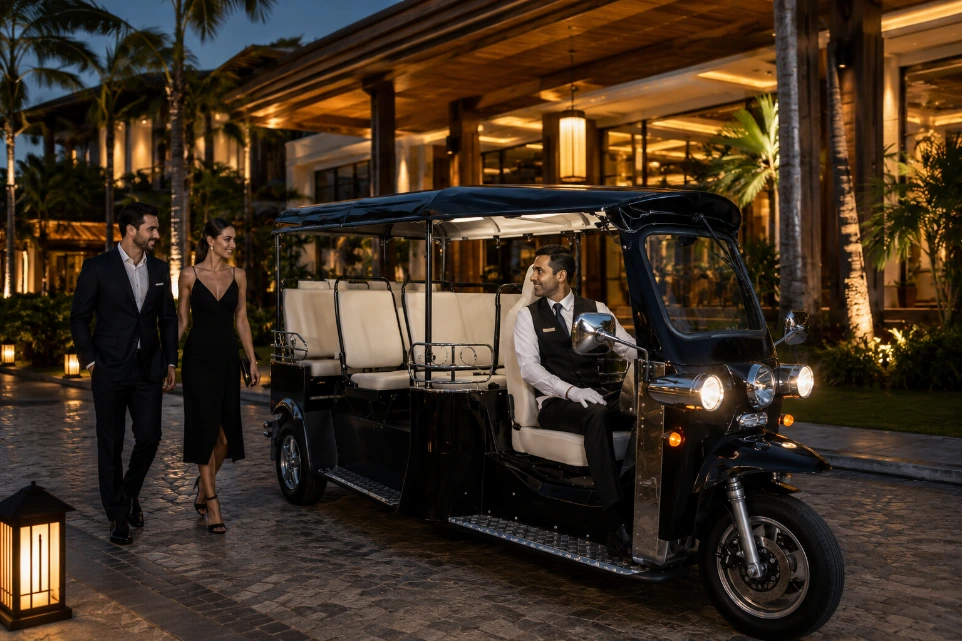
Approved seating materials, trim, presentation, weather considerations and experience-focused accessories.

03

Cargo Body & Access

Doors, openings, compartments, shelves, restraints and loading workflow.

04

Service Counters & Storage

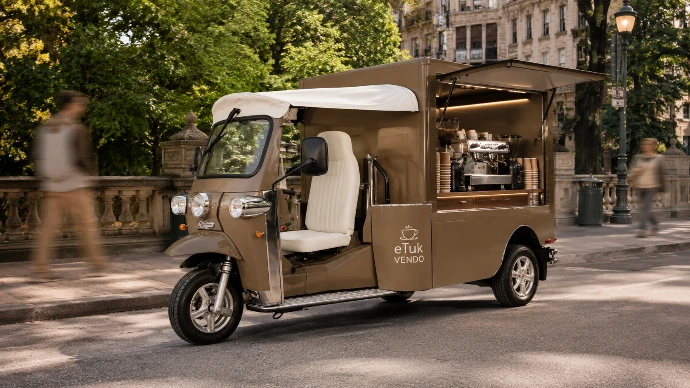
Customer interaction, work surfaces, product access, secure storage and replenishment flow.

05

Commercial Equipment

Appliance dimensions, weight, ventilation, heat, refrigeration, sanitation and service requirements.

06

Power & Water

Approved electrical loads, charging architecture, water and waste requirements where applicable.

07

Lighting & Signage

Interior, task and customer-facing lighting plus approved signage subject to location requirements.

08

Security & Connectivity

Locks, cameras, alarms, GPS and telematics may be evaluated depending on hardware and project scope.

09

Fleet Standardization

Repeatable colors, equipment, graphics and documentation for multiple vehicles or locations.

Experience-led examples

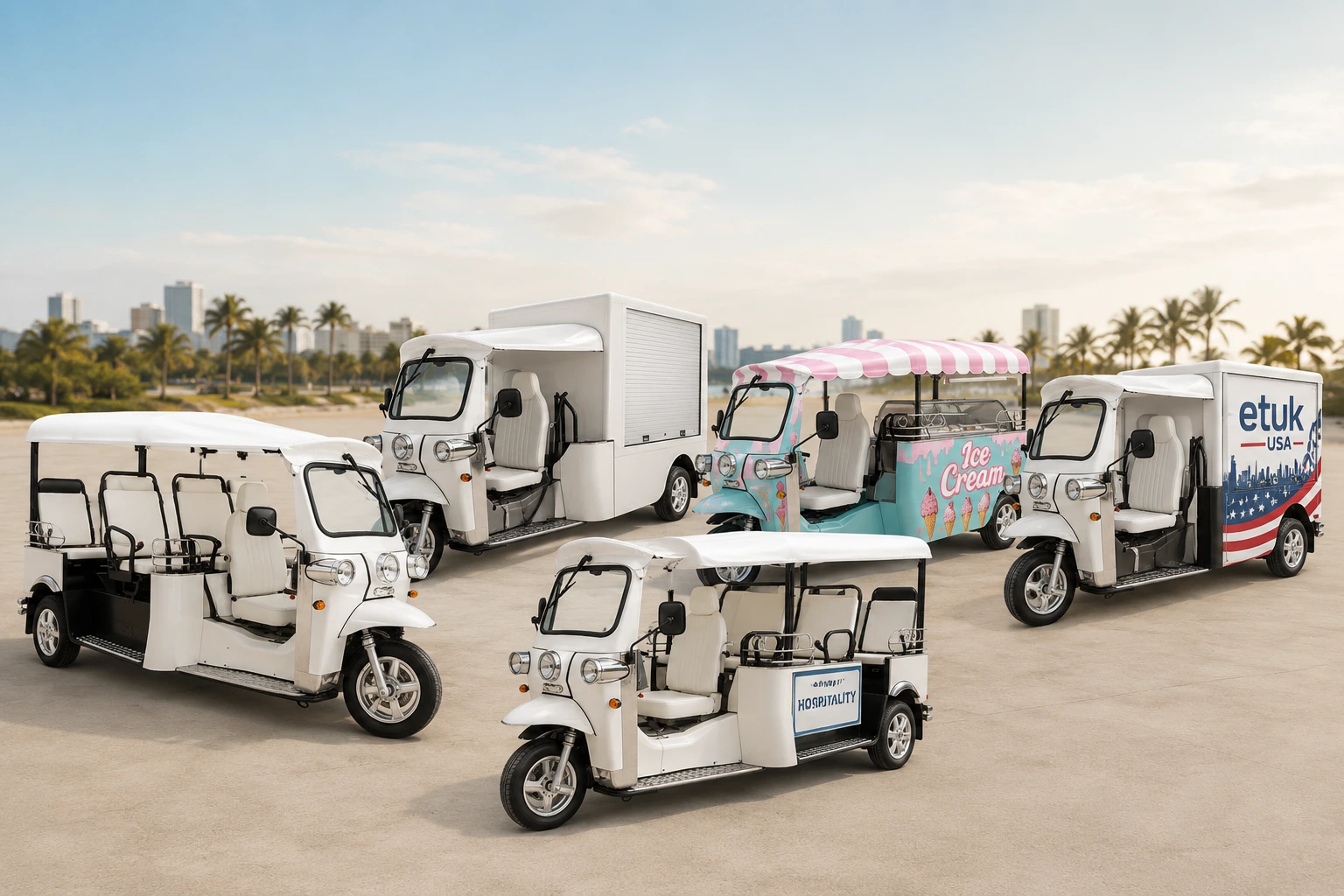
Different concepts can begin with the same commercial platform.

The service, product and location determine what must be evaluated for the finished build.

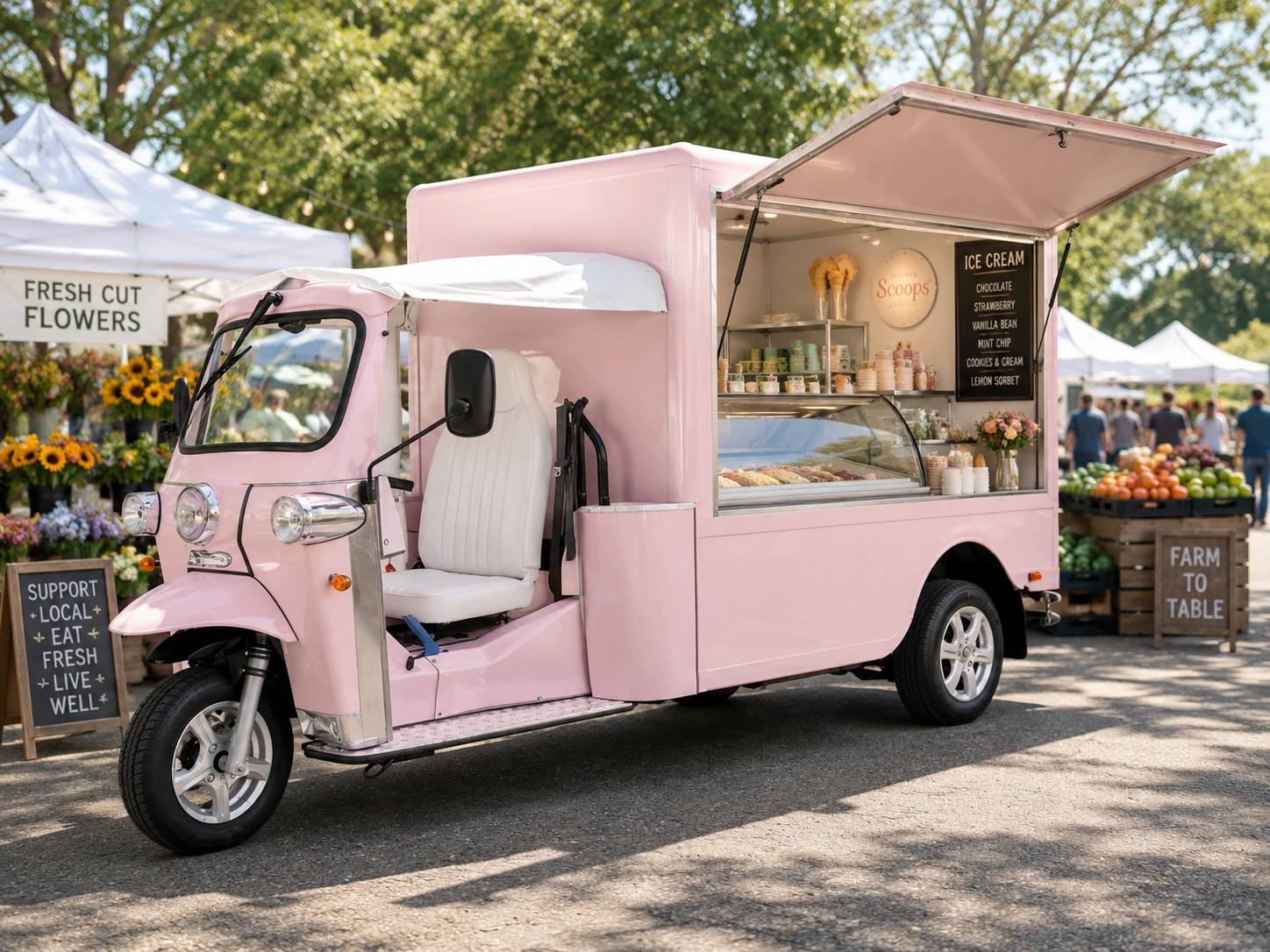
Pink branded eTuk Vendo custom build for mobile ice cream

Ice Cream Experience

Color, service openings, cold storage, product access, customer flow and location requirements.

Explore Ice Cream →

Customization boundaries

What must be reviewed before approval?

Visual concepts and requested equipment are starting points. The final vehicle must be defined through an approved specification.

Customization can explore

Functional and visual changes compatible with the selected platform and approved build direction.

  • Workflow and layout
  • Body and storage direction
  • Equipment fit
  • Color and graphics
  • Passenger finish
  • Service counters
  • Lighting and accessories
  • Fleet standardization

Customization cannot assume

These outcomes require evidence, approval or may be unavailable on the selected platform.

  • Higher payload or capacity
  • More range or speed
  • Unapproved structural changes
  • Any appliance will fit
  • Unlimited electrical power
  • Automatic road legality
  • Automatic permit approval
  • Guaranteed delivery timing

Technical information before fabrication

A useful custom-build brief includes dimensions, loads and workflow.

Describe the operation and provide manufacturer documentation for proposed commercial equipment. Dimensions alone are not enough: weight, heat, ventilation, startup load, energy use, water, waste, anchoring, service access and cleaning can affect feasibility.

  • Primary and secondary vehicle jobs
  • Operating city, state and property type
  • Passenger, cargo or product demand
  • Equipment data sheets and exact dimensions
  • Weights, power, water, heat and ventilation
  • Service, loading, cleaning and replenishment workflow
  • Brand files, colors and finish references
  • Quantity, delivery ZIP code and target timing
eTuk USA electric mobility platform supported through configuration and ownership planning

Feasibility review

The build must work as a complete system.

A change in one area can affect several others. Review connected requirements before freezing the specification.

Custom-build review map. Final requirements depend on the selected platform and project.
Review area Questions to answer Connected decisions
Mission What is the primary job, customer, route or transaction? Platform, layout, capacity, equipment and operating procedure.
Package What people, cargo, equipment and supplies must fit? Space, access, storage, weight distribution and restraints.
Energy What does the vehicle and commercial equipment consume? Charging, approved power source, operating time and energy reserve.
Utilities Are water, waste, ventilation, refrigeration or heat involved? Tanks, sanitation, airflow, maintenance and site servicing.
Environment Where, when and under what conditions will it operate? Weather, grade, surface, route, parking, storage and approvals.
Compliance Which authorities, property owners or insurers have requirements? Documentation, equipment, operating limits and launch timing.
Service How will components be inspected, cleaned, repaired and replaced? Access, documentation, spare parts and downtime planning.
Replication Is the build a one-off or repeatable fleet standard? Specification control, approved substitutions and deployment phases.

Price context

How much does a custom eTuk build cost?

MSRP is a vehicle planning reference. Custom equipment, fabrication, finish, delivery and other project items can change the complete quoted amount.

PASSENGER ETUK
$27,999

Starting vehicle MSRP

Planning reference, subject to change. Final options and project scope are confirmed in writing.

ETUK L5 CARGO
$24,999

Standard configuration MSRP

Planning reference, subject to change. Body and commercial requirements can change the quote.

VENDO & CUSTOM BUILDS
Written quote

Approved specification

Exact equipment, fabrication, finish, delivery, services, inclusions and exclusions determine the price.

Custom-build pathway

From operating need to approved specification.

Timing depends on complexity, information quality, feasibility review, approved components and final delivery scope.

STEP 01

Brief

Document the job, users, location, workflow, loads, equipment and timing.

STEP 02

Select

Identify the Passenger, Cargo or Vendo platform direction.

STEP 03

Review

Evaluate fit, weight, access, utilities, energy, documentation and feasibility.

STEP 04

Specify & Quote

Define the approved configuration, included items, exclusions and price.

STEP 05

Build & Deliver

Proceed under the written order, approved specification and agreed delivery scope.

Custom electric tuk tuk FAQ

Direct answers before configuration begins.

A visual idea is useful, but the approved specification determines what can actually be built.

What is a custom electric tuk tuk build?

A custom eTuk build adapts an approved Passenger, Cargo or Vendo platform around a defined operating job. Changes may involve layout, equipment, storage, cargo access, customer-service areas, passenger finish, branding and accessories, subject to platform limits and technical review.

What can be customized on an eTuk?

Available customization may include layout, commercial equipment, storage, cargo access, service counters, exterior branding, colors, passenger finishes, lighting, security, connectivity and accessories. Every item depends on the selected platform and approved specification.

Can eTuk USA build any design I submit?

No. A sketch, rendering or equipment list is a starting point. eTuk USA must review dimensions, loads, structural implications, power, water, heat, ventilation, access, safety, documentation and operating environment before confirming feasibility.

Can Passenger, Cargo and Vendo eTuks all be customized?

Yes, within the limits of each platform and approved project scope. Passenger projects can focus on presentation and guest experience, Cargo projects on load and workflow, and Vendo projects on customer service, commercial equipment and utilities.

Can a custom eTuk include refrigeration?

Refrigeration may be evaluated for approved Cargo or Vendo applications. The review must include appliance dimensions, weight, heat rejection, insulation, operating temperature, electrical demand, duty cycle and available energy.

Can a custom eTuk include auxiliary power and water?

Approved auxiliary electrical systems and water or waste systems may be evaluated when required by the operating concept. The complete load, equipment specifications, capacity and service method must be reviewed before approval.

Can an eTuk be customized with shelving, locks, lighting and telematics?

These features may be evaluated depending on the selected platform and project. Cargo configurations can include storage and access solutions, while lighting, security, GPS or telematics require hardware, electrical and integration review.

Will custom equipment change range or operating time?

It can. Added mass, aerodynamics, route, grades, speed, temperature and accessory or commercial- equipment energy demand may affect operating performance. Evaluate the final configuration and duty cycle rather than relying on a generic range figure.

Does a custom build automatically remain street legal?

No. The final delivered specification, VIN documentation and installed equipment support the registration process, but responsible authorities determine title, registration category, licensing, insurance and allowable roads.

How much does a custom eTuk build cost?

Passenger eTuk pricing starts at $27,999 and the standard eTuk L5 Cargo configuration starts at $24,999, subject to change. Vendo and custom projects require a written quote because equipment, fabrication, finish, delivery and services determine the final amount.

How long does a custom eTuk build take?

There is no universal timeline. Timing depends on design complexity, information completeness, technical review, component availability, approvals, fabrication, order terms, logistics and delivery scope. Use the timing confirmed in the written proposal or order.

Is a custom eTuk cheaper than modifying a golf cart or buying a food truck?

The answer depends on the operating job and complete project scope. A golf cart can provide a lower-cost starting platform for simpler mobility or light commercial work, while a traditional food truck provides much greater kitchen space at substantially higher vehicle cost. Compare the required equipment, capacity, route, utilities and total ownership cost rather than base price alone.

What should I submit for a custom-build review?

Provide the operating job, city and state, property or route, users, passenger or cargo demand, equipment data sheets, dimensions, weights, electrical and water requirements, workflow, brand references, quantity, delivery ZIP code and target timing.
What must your custom eTuk carry, serve or accomplish?

Share the operating job, location, workflow, equipment, utilities, brand direction, quantity and timing. eTuk USA will help determine the appropriate platform and technical-review next step.