Skip to Content
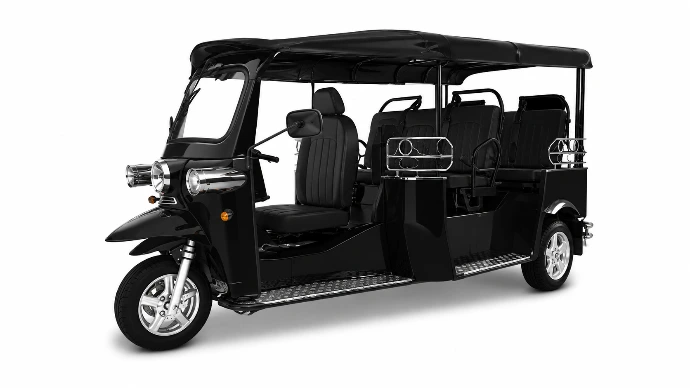
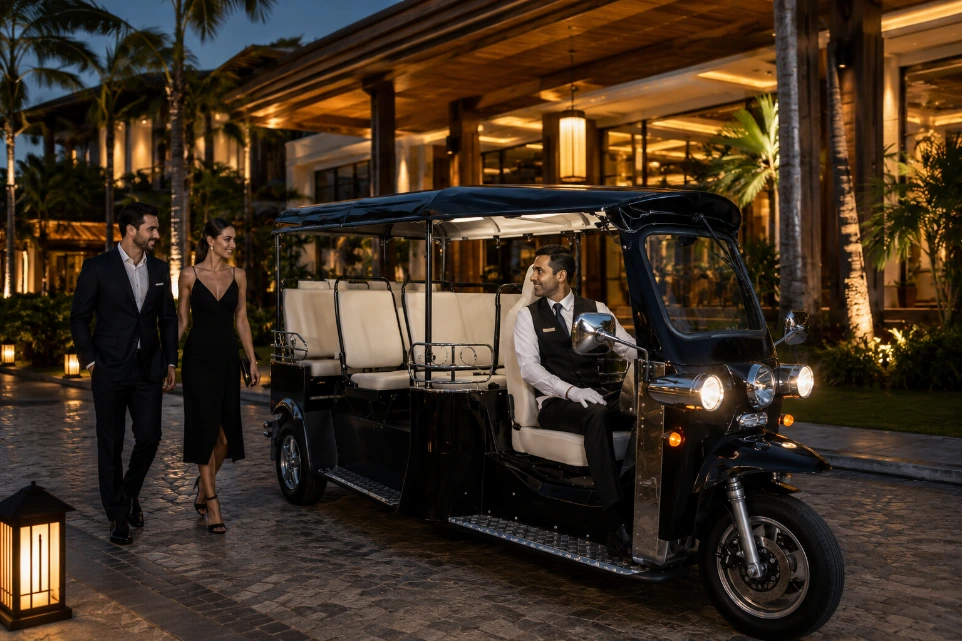
Black eTuk hospitality shuttle providing a premium VIP guest transportation experience

Hotel, resort and destination guest mobility

Electric Hospitality Shuttle for Hotels & Resorts

An eTuk hospitality shuttle is a compact all-electric passenger platform for planned short-distance guest movement between entrances, rooms, parking areas, amenities, venues and other property destinations. The current Passenger eTuk carries six passengers plus one driver, and its suitability depends on the route, demand, baggage, surface, grade, weather, charging plan and applicable operating rules.

6 passengers + 1 driverDefined property routesStreet-ready specificationVIN assignedAll-electric operation

Street-ready equipment and an assigned VIN support documentation; they do not create one nationwide vehicle classification or unrestricted road access. The responsible authorities determine registration, driver, insurance and road-use requirements for the exact vehicle and location.

6 + 1 capacitySix passengers plus one driver in the current direction
Guest-route solutionDesigned around defined stops, demand and service hours
All-electricNo gasoline use or tailpipe emissions during operation
$27,999 MSRPPassenger vehicle planning reference; subject to change

Primary answer

What problem does a hospitality shuttle solve?

It can reduce the distance guests must walk and connect parts of a property through a visible, repeatable transportation service. The strongest fit is a clearly mapped short-distance route with known stops, safe boarding areas, manageable passenger and baggage demand, an assigned driver, a practical charging window and operating rules confirmed for the location.

GUEST

Who needs the ride?

Arrivals, families, VIPs, event attendees, guests with luggage or people moving between amenities.

ROUTE

Where are the stops?

Entrance, parking, rooms, beach, marina, restaurant, conference space or event venue.

SERVICE

How will it run?

Scheduled loop, on-demand concierge service, event movement or a dedicated operational route.

SITE

What must be verified?

Surface, grade, weather, boarding, storage, charging, roads, insurance and local requirements.

Hospitality operating applications

One platform can support several defined guest-mobility jobs.

Each job needs its own route, demand and service plan. A vehicle should not be assigned to conflicting tasks at the same time.

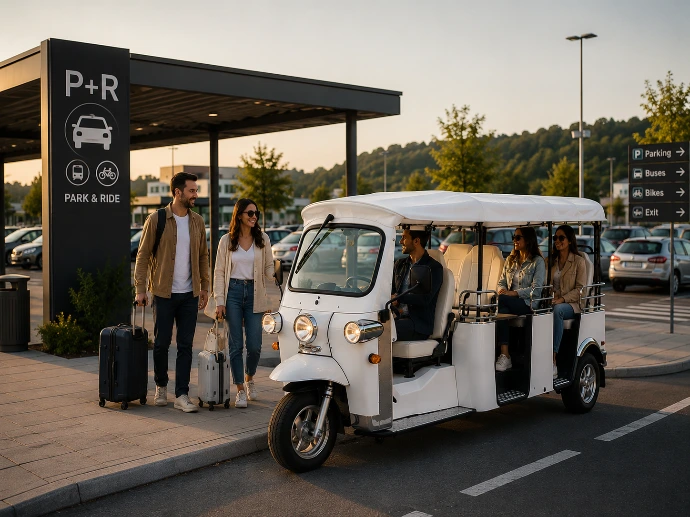
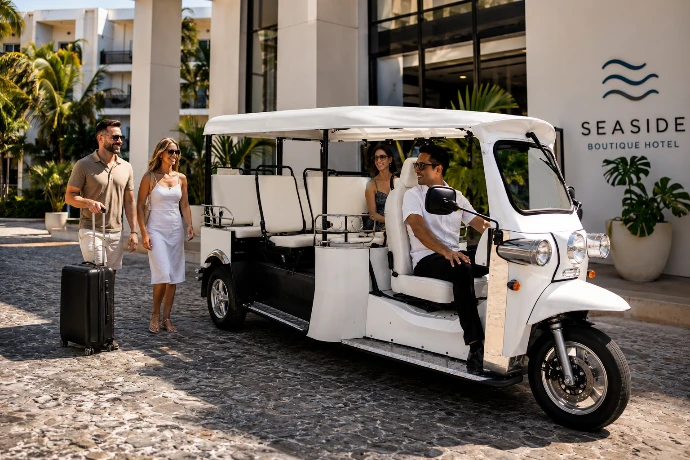
White eTuk hospitality shuttle welcoming arriving hotel guests with luggage
Arrival experience

Guest & Luggage Connection

Connect reception, arrival zones, accommodations and amenities while planning separately for passenger seats and baggage space.

  • Lobby and rooms
  • Welcome tours
  • Concierge movement
White eTuk electric hospitality shuttle boarding passengers at a parking connection
Last-distance connection

Parking Shuttle

Move guests between remote parking, overflow areas, entrances and event destinations through safe, defined stops.

  • Remote parking
  • Overflow areas
  • Venue entrances
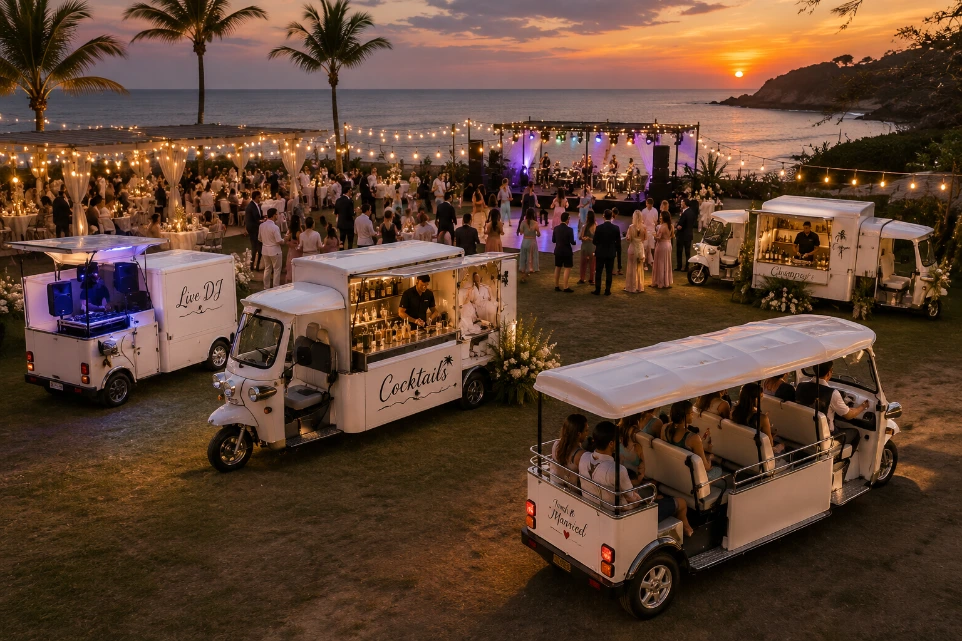
eTuk electric hospitality vehicles supporting guest transportation at a destination event
Temporary demand

Events & Conferences

Plan passenger circulation between hotels, parking, meeting spaces, hospitality zones and programmed venues.

  • Weddings
  • Conferences
  • Property events
Black eTuk passenger shuttle configured for a premium hospitality and VIP service
Premium service

VIP & Concierge Mobility

Create a defined premium transportation experience with trained drivers, presentation standards and scheduled availability.

  • VIP arrivals
  • Private property tours
  • Special guest service
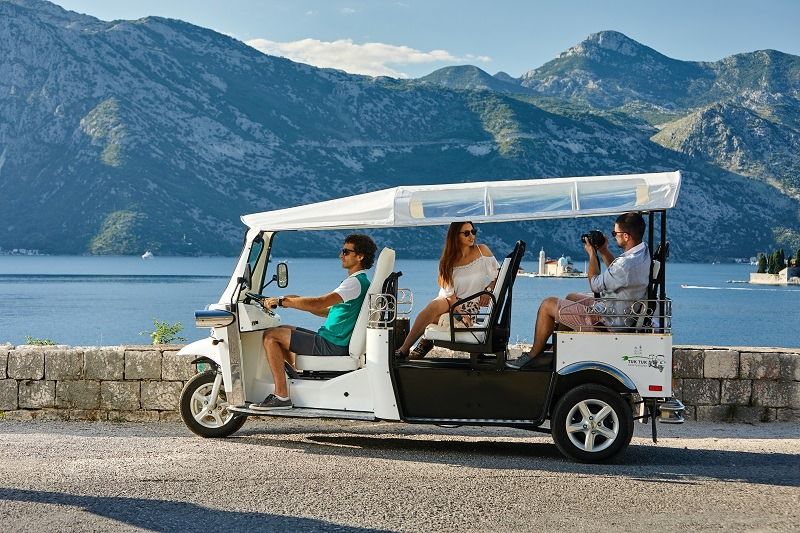
eTuk L5 Limo GT passenger shuttle prepared for a defined hospitality property route

Route before vehicle count

Map the service before deciding whether one shuttle is enough.

Document every stop, segment and operating window. Measure demand by time of day and account for boarding, unloading, luggage, traffic, guest questions and delays—not only driving time.

  • List every origin, destination and authorized stop
  • Measure distance, grade, surface and turning space
  • Record expected passengers by operating window
  • Add dwell time for boarding and baggage
  • Identify public-road and private-property segments
  • Define dispatch, communication and driver responsibility
  • Locate parking, charging and overnight storage
  • Create a weather and service-interruption plan

Capacity and demand

Six seats do not equal six guests in every trip plan.

The current passenger direction provides six passenger positions plus the driver. Baggage, service items, boarding needs and the final specification can reduce practical trip capacity.

Hospitality shuttle demand-planning checklist. Measure the actual property and operating pattern.
Planning factorWhat to documentWhy it changes the plan
Passenger demandGuests per 15- or 30-minute operating window, including peaks and event releases.Peak demand—not the daily average—often determines wait time and fleet quantity.
BaggageTypical bags, golf equipment, strollers or service items carried with guests.Items require secure space and may reduce usable passenger capacity.
Trip cycleDriving, boarding, unloading, waiting and dispatch time for a complete round trip.Longer cycles reduce how many passengers one vehicle can move per hour.
BoardingStep, clearance, assistance, queue and safe loading-area requirements.Boarding procedure affects dwell time, staffing and suitability.
Service standardTarget wait time, schedule reliability, VIP priority and on-demand requests.A higher service standard can require reserve capacity or an additional vehicle.
DowntimeCharging, inspection, cleaning, maintenance and unexpected unavailability.A route with no spare capacity can stop when the assigned vehicle is unavailable.

Guest experience standards

Transportation becomes part of the hospitality experience.

Define the service standard as carefully as the route. The vehicle cannot compensate for unclear queues, inconsistent dispatch or unprepared drivers.

01

Safe Boarding

Designated stops, clear approach, stable loading area and a documented boarding procedure.

02

Driver Standard

Authorization, training, route knowledge, communication, inspection and guest-service expectations.

03

Queue & Dispatch

Visible pickup points, schedule or request method, wait-time communication and priority rules.

04

Luggage Handling

Defined limits, secure placement, loading responsibility and protection of passenger space.

05

Weather Response

Heat, rain, wind, cold, route conditions and the point when service should be modified or paused.

06

Access Planning

Evaluate guest mobility and accessibility goals for the actual vehicle, boarding area and service; do not assume certification or universal suitability.

Charging and site readiness

Charging must fit between guest-service commitments.

Plan where the vehicle parks, which approved charging equipment and electrical supply apply, how long it is available to charge and who verifies connection and readiness. Route, load, speed, temperature, grade and accessory use can affect energy demand.

  • Identify the assigned parking and charging position
  • Verify electrical capacity and approved equipment
  • Keep cables outside guest paths and vehicle movement
  • Build inspection and charging into staff responsibility
  • Protect an operating reserve for expected variability
  • Define the response to interrupted charging or vehicle downtime
eTuk electric hospitality vehicle supported through site, charging and ownership planning

Street-ready and VIN-assigned

Property transportation still requires location-specific verification.

A street-ready final specification means the delivered vehicle includes the road-use equipment identified in that specification, and an assigned VIN identifies the vehicle. Those facts support documentation but do not determine state classification, licensing, insurance, commercial-passenger rules or allowable roads.

A three-wheel eTuk is not a federal Low-Speed Vehicle because the federal LSV definition applies to four-wheeled vehicles. Federal and state terminology can differ, so confirm the exact vehicle and route with the responsible authorities and insurer before operation.

Passenger eTuk price

Vehicle planning reference

$27,999
MSRP · subject to change

The written quote defines the current vehicle, options, finish, delivery and included project items. MSRP is not the complete hospitality-program budget.

Vehicle & Options

Final passenger platform, finish, approved accessories and configuration.

Delivery & Documentation

Destination, logistics and the items identified in the written proposal.

Site & Charging

Electrical work, parking, signs, boarding areas and storage may be separate.

Operation

Insurance, staffing, training, cleaning, maintenance and reserve capacity.

Hospitality shuttle pathway

From property map to supported service.

eTuk USA can help organize the vehicle and proposal questions. The operator remains responsible for the final route, staffing and applicable approvals.

STEP 01

Map

Define the property, stops, road segments, surfaces, grades and boarding areas.

STEP 02

Measure

Document passengers, baggage, peak windows, trip cycles and service standard.

STEP 03

Verify

Review site, charging, driver, insurance, authority and operating requirements.

STEP 04

Quote

Define vehicle configuration, quantity, included items, exclusions and price.

STEP 05

Deploy

Prepare drivers, procedures, charging, inspection, communication and support.

Hospitality shuttle FAQ

Answers for hotels and resorts.

Start with the property and route, then determine whether the passenger eTuk fits the service.

What is an eTuk hospitality shuttle?

An eTuk hospitality shuttle is a compact all-electric passenger platform used for planned short-distance guest movement between entrances, rooms, parking, amenities, venues and other property destinations. Suitability depends on the route, demand, baggage, surface, grade, weather, charging and applicable rules.

How many people can the Passenger eTuk carry?

The current passenger direction is six passengers plus one driver. The final specification controls. Baggage, service items, boarding requirements and operating conditions must be planned separately and can reduce practical trip capacity.

Where can hotels and resorts use an eTuk shuttle?

Potential applications include guest arrivals, parking connections, property tours, amenities, conferences, weddings, VIP service and defined routes between hospitality destinations. Every public-road and private-property segment must be evaluated for the exact vehicle and use.

How do I know whether one shuttle is enough?

Measure peak passenger demand, trip-cycle time, boarding and unloading time, baggage, target wait time, operating hours, charging and downtime. One vehicle may fit a low-demand loop but may not meet simultaneous arrivals, event releases or a high service standard.

Can the shuttle carry guests and luggage?

It may support guest movement with luggage when the final configuration, secure placement, weight and available space are appropriate. Do not count every passenger seat and assume unlimited baggage space. Describe typical luggage in the route and quote brief.

Is the eTuk hospitality shuttle street legal?

Delivered vehicles are described as street-ready and VIN-assigned when those facts apply to the final specification, but responsible authorities determine title, registration category, licensing, insurance and allowable roads. A three-wheel eTuk is not a federal Low-Speed Vehicle because the federal definition requires four wheels.

Is the Passenger eTuk accessible?

Do not assume a particular accessibility certification or suitability. Evaluate the exact vehicle, boarding height, clearances, securement needs, passenger assistance, stop design and applicable requirements with qualified parties before promising service.

How much does a hospitality eTuk shuttle cost?

The Passenger eTuk has a $27,999 MSRP planning reference, subject to change. Options, finish, delivery and other project items can change the complete amount, so request a written quote for the intended configuration and destination.

What information should a hotel provide for a quote?

Provide the property address, route map, stops, public and private road segments, distance, grade, surface, guest and luggage demand, trip schedule, operating hours, charging location, vehicle quantity, delivery ZIP code and target timing.
Which guest destinations should your hospitality shuttle connect?

Share the property map, stops, demand, baggage, schedule, road environment, charging location and service standard. eTuk USA will help define the passenger-vehicle and proposal next step.