Primary answer
How does an eTuk mobile coffee business work?
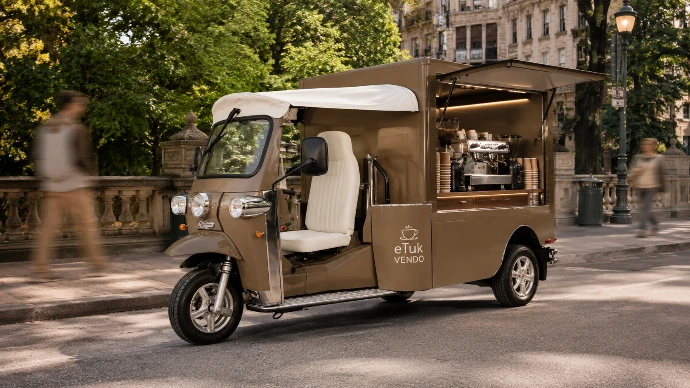
The operator brings a defined beverage service to a permitted location where customers already work, study, gather or attend an event. The menu determines preparation steps; those steps determine equipment, storage, water, waste, power and staffing; the location determines permissions, service hours and customer flow. eTuk USA helps organize the Vendo platform and written build scope around that operating plan.
Who will buy?
Employees, students, guests, event attendees, market visitors or another defined audience.
What will you serve?
Espresso drinks, brewed coffee, cold beverages, tea, packaged items or a focused menu.
Where will service occur?
Approved property, venue, route, market space or event location with practical access.
What supports service?
Vehicle, equipment, utilities, storage, sanitation, staff, replenishment and procedures.
Market and location fit
Start where a specific customer already has a reason to stop.
Foot traffic alone is not proof of demand. Confirm permission, service timing, customer access, competition, pricing and repeatability before committing to a build.
College Campuses
Evaluate class schedules, approved vending zones, student traffic, events, storage and campus vendor rules.
Office Properties
Define employee demand, tenant permission, morning and break windows, indoor support space and recurring access.
Hotels & Resorts
Plan service around arrivals, meetings, pools, beaches, events or amenities without disrupting guest circulation.
Events & Catering
Confirm vendor approval, load-in, service duration, expected attendance, menu capacity, utilities and breakdown time.
Markets & Community Sites
Review recurring schedule, local vending rules, weather, queue area, parking, waste and customer demand.
Existing Café Extension
Define whether the vehicle uses an existing kitchen, commissary, staff, inventory and brand system or operates separately.
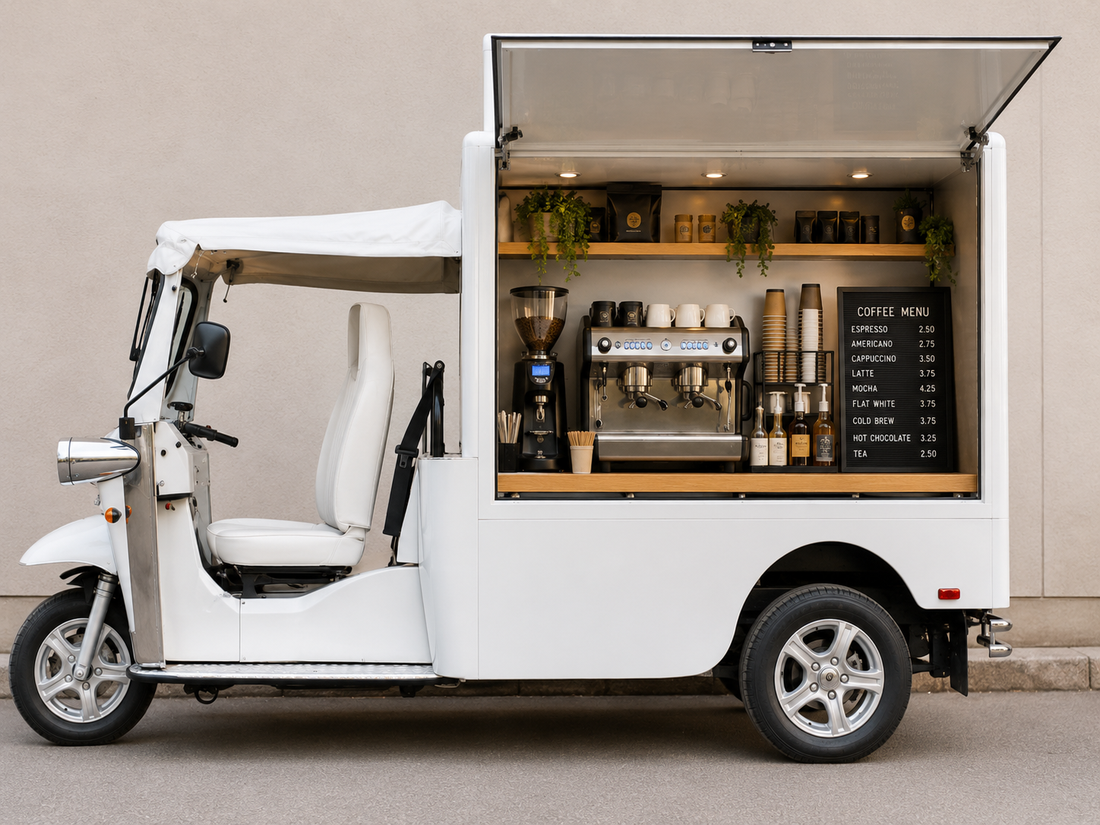
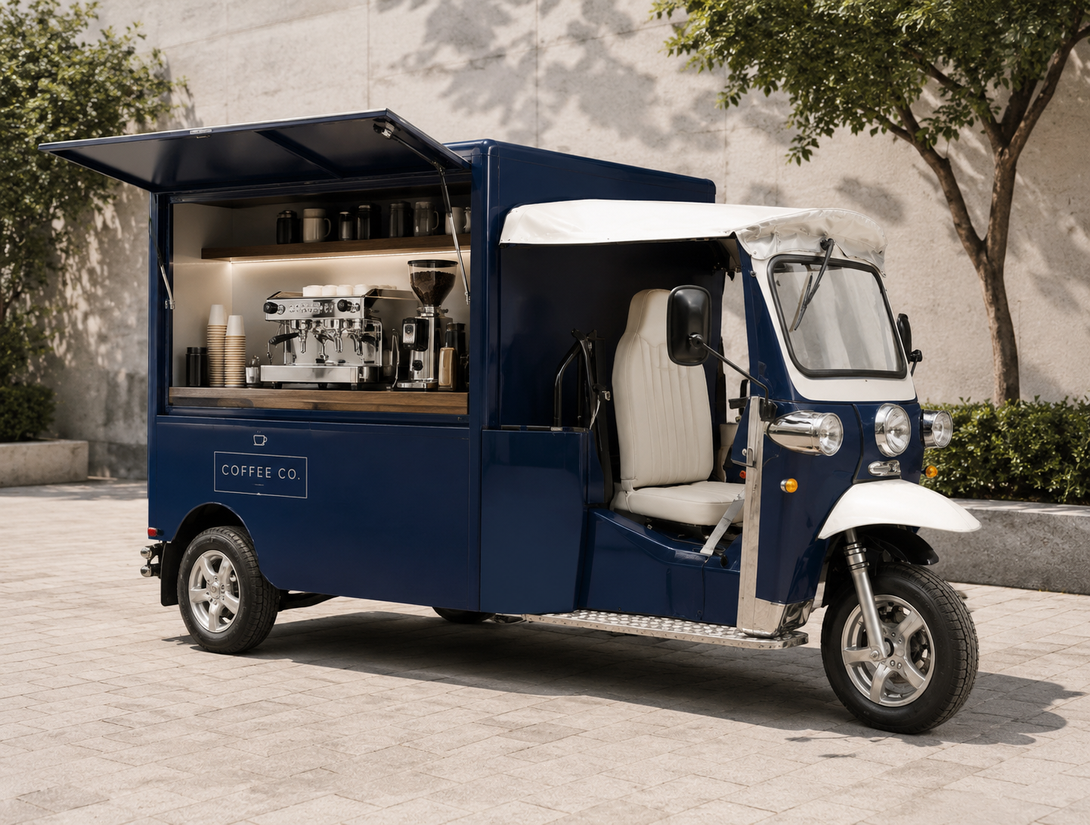
One platform, different coffee experiences
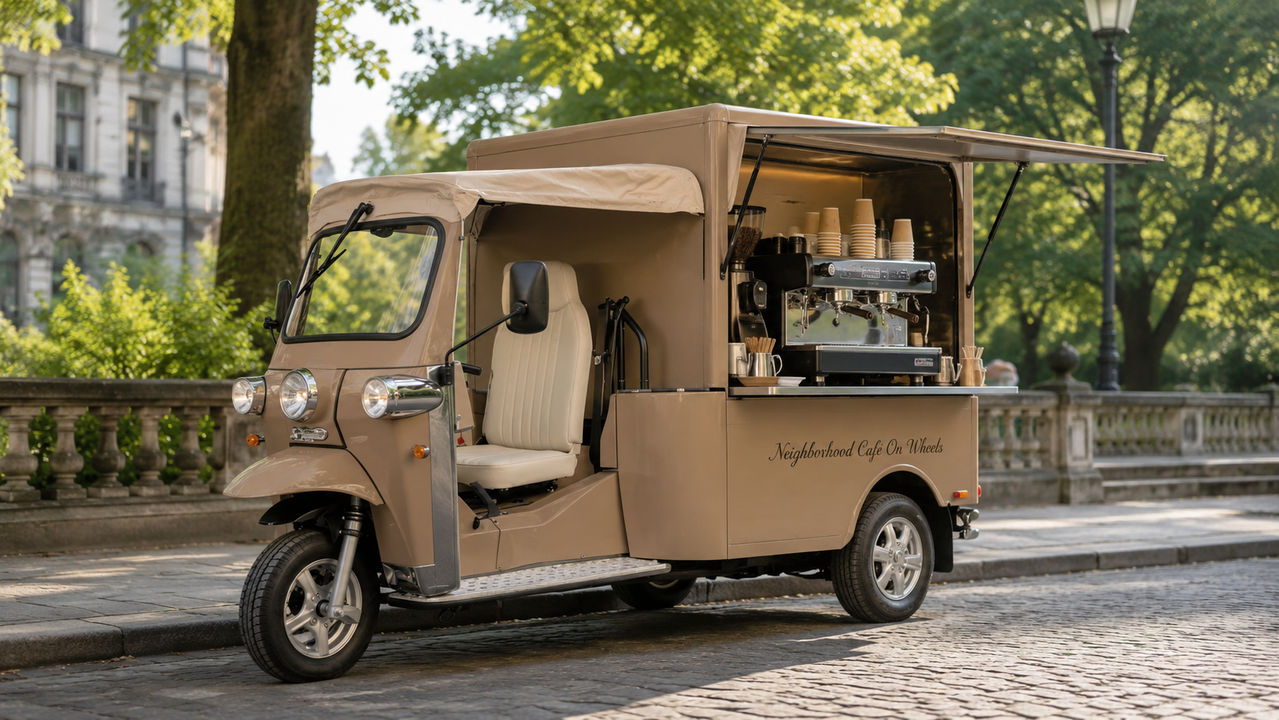
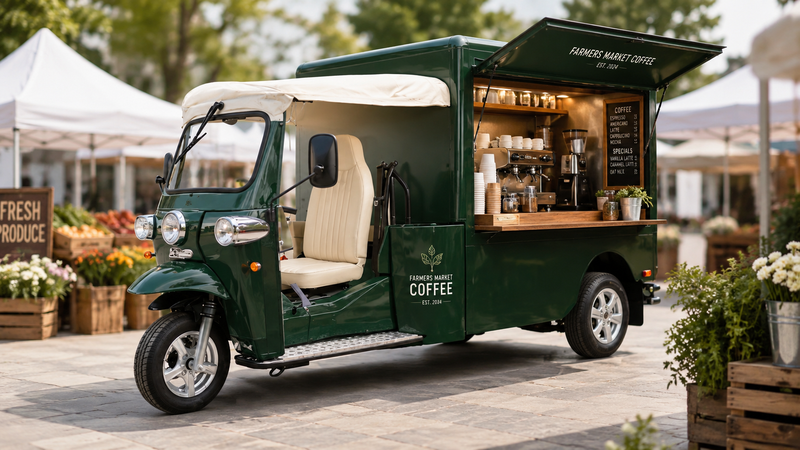
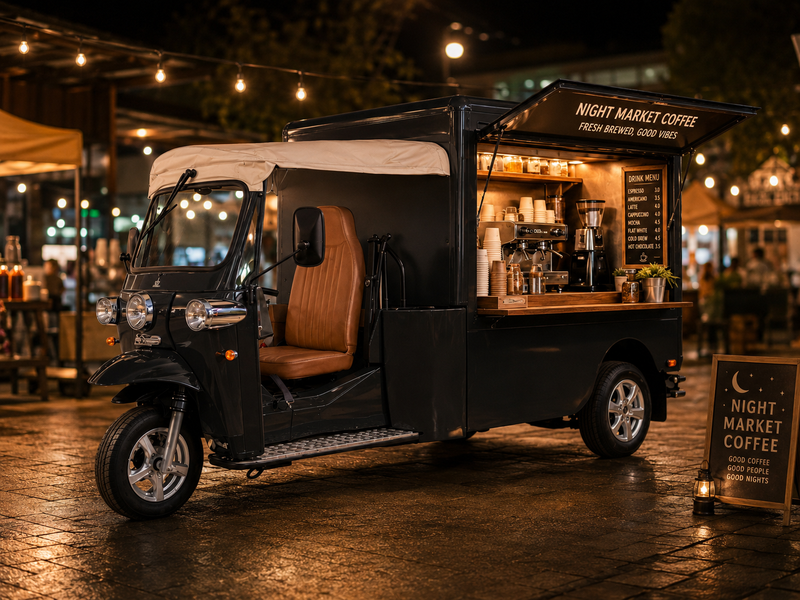
Show the customer where the coffee experience belongs.
The vehicle can support different brand environments, but each location still needs its own permission, operating plan, utilities, menu and demand review.
Menu before equipment
The coffee concept determines the commercial build.
A small menu of prepackaged products creates different equipment and regulatory needs than espresso preparation, milk handling, blended drinks or food service. Freeze the menu and service method before finalizing counters, appliances, refrigeration, water or storage.
- List every beverage and food item
- Map preparation, serving and payment steps
- Identify time/temperature-controlled ingredients
- Provide exact equipment manufacturer data sheets
- Document water, wastewater and handwashing needs
- Calculate ingredient, cup and supply storage
- Plan cleaning, sanitizing and replenishment
- Confirm the menu with the local regulatory authority
Menu-to-system map
Every product choice creates operating requirements.
This table organizes the questions. It is not an equipment approval or a substitute for the responsible authority’s requirements.
| Menu direction | Build questions | Operating questions |
|---|---|---|
| Espresso drinks | Machine and grinder data, startup and running load, water supply, filtration, milk refrigeration, heat and counter workflow. | Drink volume, barista steps, milk handling, cleaning, grounds and wastewater. |
| Brewed coffee | Brewer or insulated-dispensing method, potable water, holding equipment, cups, condiments and storage. | Batch schedule, holding limits, demand by time and disposal of unsold product. |
| Cold brew & iced | Cold storage, ice source, dispensing, ingredient containers, temperature control and drainage. | Preparation location, transport, refill, temperature monitoring and peak-weather demand. |
| Blended beverages | Blender load, sound, ice, refrigeration, wash process, counter space and secure storage. | Cycle time, queue, cleaning between products and high-power simultaneous use. |
| Tea & refreshers | Heating or cold-holding method, water, ingredients, pumps or dispensers and service layout. | Preparation, allergen communication, storage, freshness and waste. |
| Food & snacks | Packaged versus prepared items, display, storage, temperature control and approved source. | Food rules, labeling, inventory rotation, contamination control and expanded permits. |
Food service and local approval
The vehicle configuration does not issue the permit.
The responsible state, local, tribal or territorial authority determines the adopted rules, plan review, inspection, permits and operating conditions.
Identify the Regulator
Determine which health, business, fire, zoning, vending, property and event authorities apply before approving the build.
Submit the Actual Concept
Use the final menu, equipment, water, waste, storage, preparation location and operating method—not a generic rendering.
Approved Preparation
Confirm ingredient sources, any commissary or kitchen relationship, transport, storage and replenishment requirements.
Potable Water System
Determine handwashing, water supply, tank, plumbing, wastewater, cleaning and servicing requirements for the jurisdiction.
Cleanable & Approved
Confirm applicable sanitation, certification, installation, access, ventilation and manufacturer-use requirements.
People & Procedures
Plan food-safety responsibility, employee practices, temperature control, cleaning, records and inspection readiness.
Configuration references
The platform may look similar while the operating system changes.
These eTuk applications illustrate why menu, venue and customer experience must be defined before equipment and finish are approved.
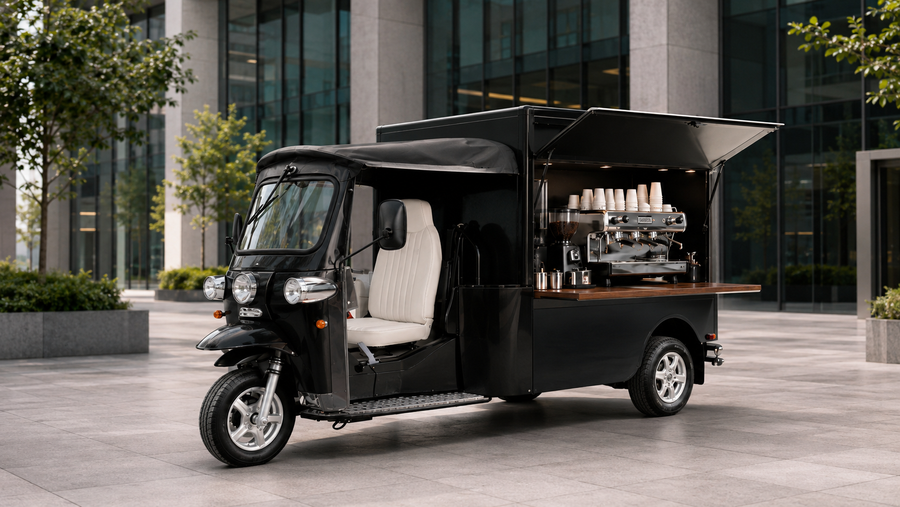
Business-Park Service
Employee traffic, morning peaks, tenant permission, charging and support space shape the daily plan.
Review Business in a Box →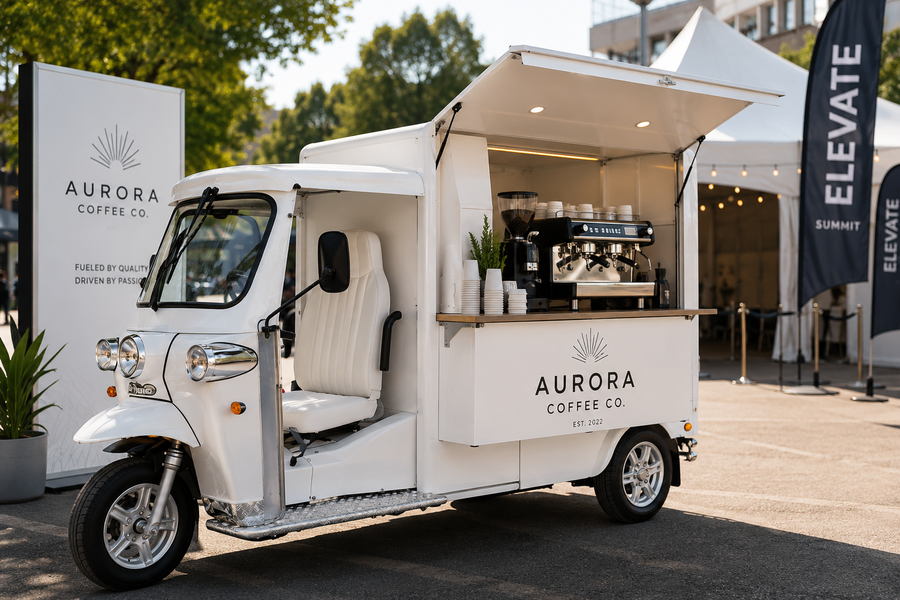
Brand Activations
Events add load-in, vendor approval, service windows, utilities, queues and breakdown requirements.
Explore Custom Builds →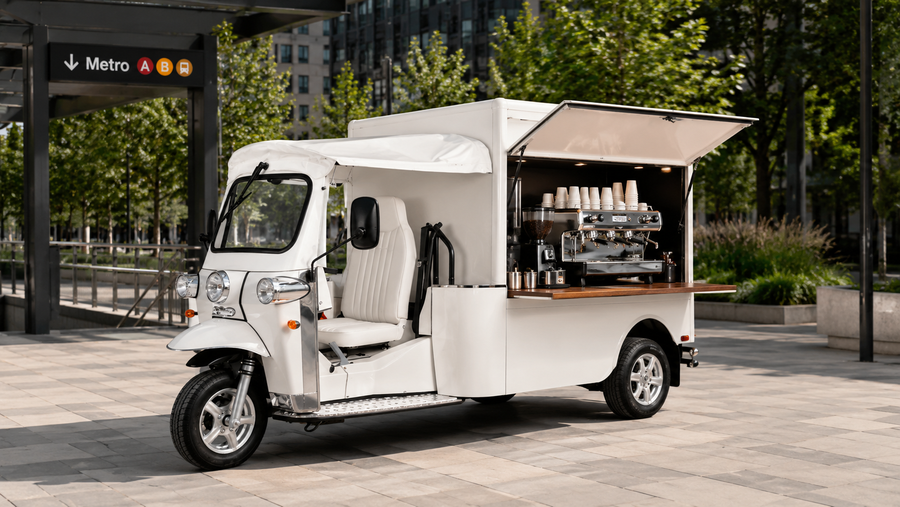
Business-District Operations
Property access, vending rules, pedestrian flow, parking and service timing must be confirmed before launch.
Build the Project Brief →Complete startup budget
The vehicle quote is not the full cost of opening.
Build a written budget separating one-time and recurring costs. Use local quotes and documented assumptions; do not rely on a generic sales or profit estimate.
Vehicle & Build
Vendo platform, body, approved appliances, utilities, storage, finish and delivery.
Approvals & Professional Help
Business setup, permits, plan review, inspection, legal, accounting and insurance.
Site & Support Space
Property fees, commissary or kitchen, storage, charging, water, waste and parking.
Opening Inventory
Coffee, milk, ingredients, food, cups, lids, disposables, cleaning supplies and smallwares.
People & Systems
Hiring, training, payroll, POS, communications, scheduling and operating procedures.
Operating Reserve
Cash for delayed launch, lower demand, seasonality, repairs and other early-stage variability.
Brand and customer experience
Design the service moment—not only the wrap.
Branding can make the vehicle visible, but repeat customers depend on the product, speed, cleanliness, consistency, staff and location. Develop graphics after the service openings, equipment access and operating workflow are known.
- Name, logo, colors and readable menu system
- Queue, order, payment and pickup positions
- Lighting and visibility for actual service hours
- Customer and staff clearances around openings
- Storage that keeps counters organized
- Brand standards that can be maintained and cleaned
Mobile coffee pathway
From menu and market to written build scope.
Approval and timing depend on the actual location, menu, equipment, information quality and technical requirements.
Market
Define customer, location, permission, schedule, demand and service method.
Menu
Freeze products, preparation steps, ingredients, storage and expected volume.
Qualify
Review authority, site, utilities, equipment data, workflow and operator readiness.
Configure & Quote
Define the Vendo build, included items, exclusions, delivery scope and price.
Approve & Launch
Complete applicable approvals and prepare staff, supply, cleaning and support systems.
Mobile coffee business FAQ
Answers before you build.
Start with the menu, customer and location; then define the vehicle and commercial system.
What is an eTuk mobile coffee business?
An eTuk mobile coffee business uses the configurable Vendo platform as a customer-facing beverage service vehicle built around a defined menu, market, location, workflow and approved equipment package. The operator manages the business and applicable approvals unless a written proposal expressly includes a specific service.
Is the mobile coffee eTuk a complete turnkey business?
Do not assume a universal turnkey package. The written proposal defines the vehicle, equipment, finish, services, inclusions and exclusions. Business formation, permits, site permission, insurance, staffing, inventory, food-safety procedures and operating results are not automatically included.
What coffee drinks can the eTuk serve?
The concept may be evaluated for espresso drinks, brewed coffee, cold brew, iced beverages, tea, refreshers, packaged food or another focused menu. Final capability depends on approved equipment, water, waste, power, refrigeration, storage, workflow and local requirements.
Does a mobile coffee business need permits?
Requirements vary by jurisdiction, location, menu and operating method. Contact the responsible health, business, fire, zoning, vending, property and event authorities before approving the build. The FDA Food Code is a model, while the applicable adopted rules control.
Does the eTuk need potable water and a handwashing sink?
The required water, handwashing, plumbing and wastewater system depends on the menu, preparation method and adopted local rules. Provide the complete concept to the responsible authority and build only to the approved requirements.
Can espresso equipment run from the vehicle?
Do not assume compatibility. Provide exact manufacturer data for startup and running load, voltage, dimensions, weight, heat, ventilation, water, drainage, cleaning and duty cycle. The complete power and utility plan must be reviewed before equipment is approved.
Where can a mobile coffee eTuk operate?
Potential locations include campuses, office properties, hospitality venues, events, markets and approved community sites. Operation depends on property permission, vendor rules, food approvals, route and parking restrictions, customer access, utilities and actual demand.
How much does a mobile coffee eTuk cost?
Vendo and mobile coffee projects require a written quote because the body, appliances, refrigeration, power, water, storage, counters, graphics, delivery and services vary. A base-platform number would not accurately describe the completed project.
How much money can a mobile coffee business make?
eTuk USA does not make an earnings claim on this page. Results depend on demand, location, menu pricing, product cost, labor, fees, seasonality, approvals, downtime and execution. Build projections from documented assumptions and obtain qualified financial and legal advice.
What should I submit for a coffee eTuk quote?
Provide the customer, operating location, menu, preparation method, expected volume, equipment data sheets, water and waste needs, electrical loads, storage, service workflow, brand direction, delivery ZIP code, target timing and status of local approval discussions.