Guest Transportation
Connect rooms, parking, restaurants, beaches, marinas, amenities and arrival areas while making mobility part of the stay.
Explore Hospitality Shuttle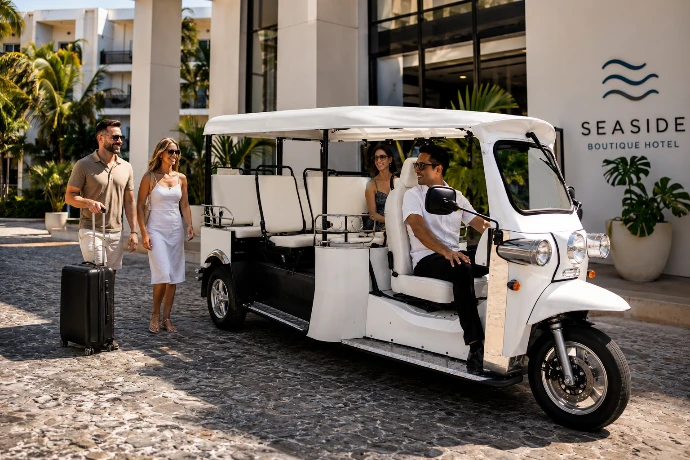
Short-distance passenger mobility
An electric shuttle is a short-distance passenger service built around a defined route, stops, demand, charging plan and operating rules. eTuk USA uses the street-ready, VIN-assigned eTuk L5 Limo GT—with seating for six passengers plus one driver (6+1)—as a compact shuttle platform for properties, campuses, parking connections, events and destinations.
The vehicle is one part of the shuttle system. Route permission, registration, insurance, charging, staffing, accessibility and operating procedures must be confirmed for the property and jurisdiction.
Electric shuttle applications
The strongest use cases have repeatable short trips, controlled stops, clear passenger demand and a practical place to park and charge.
Connect rooms, parking, restaurants, beaches, marinas, amenities and arrival areas while making mobility part of the stay.
Explore Hospitality ShuttleSupport scheduled or on-demand trips among buildings, entrances, parking areas and gathering points on a defined campus.
Discuss a Campus RouteMove passengers between remote parking, garages, entrances, venues and transportation pickup points.
Plan a Parking ConnectionConnect entrances, hospitality areas, parking, stages, hotels and event zones with a visible passenger service.
Plan Event MobilitySupport visitor movement among attractions, waterfronts, downtown districts, mixed-use properties and local partners.
Discuss Destination MobilityBuild a guided passenger experience around a validated route, stops, operating authority and service schedule.
Discuss a Tour OperationThe complete shuttle system
A shuttle succeeds when the vehicle, route, passenger flow, charging, operator and permissions work together.

Passenger shuttles can operate as one layer of a coordinated event or property mobility system.
Distance, grades, surfaces, crossings, public-road exposure and approved pickup points.
Who rides, peak arrivals, wait-time target, luggage, group size and accessibility needs.
Driving time, dwell time, loading, unloading, traffic variability and recovery time.
Operating hours, parking, electrical service, charging windows and reserve capacity.
Driver qualifications, training, dispatch, communications, passenger assistance and shift coverage.
Registration, insurance, route approval, property rules and local operating requirements.
Knowledge graph boundaries
This structure prevents duplicated search intent while giving buyers a direct path from vehicle research to industry application and route planning.
Answers what the L5 Limo GT vehicle is, including 6+1 seating, configuration, price context and vehicle questions.
Explore the vehicle →Answers how to plan and deploy a passenger shuttle around a route, stops, demand, charging, staffing and operating rules.
Current page: shuttle planning →Answers how hotels and resorts can use guest transportation as an operating service and memorable hospitality experience.
Explore hospitality use →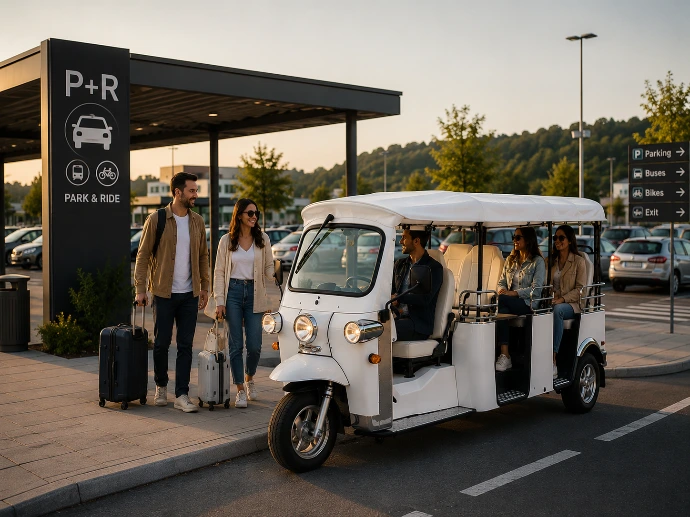
Daily operating plan
A useful shuttle plan describes what the operator does before, during and after each shift. That includes vehicle inspection, charging status, communications, passenger loading, stop control, weather decisions and incident escalation.
Capacity planning
The L5 Limo GT provides six passenger seats, but actual service capacity depends on the trip cycle, occupancy, dwell time, demand peaks, luggage and reserve time.
This is only a starting relationship—not a promise of passenger throughput. Apply realistic occupancy, loading time, recovery time and an operating buffer before choosing one vehicle or a fleet.
Use arrival waves, event release times and class or shift changes—not only the daily average.
Define the maximum acceptable wait and the dispatch response needed to meet it.
Boarding, unloading, luggage, questions and accessibility needs add time to each cycle.
Charging, inspections, maintenance, weather and operator breaks affect available service hours.
Vehicle and route brief
The website explains the planning framework. The route assessment, vehicle proposal and local authority determine the final operating plan.
| Vehicle platform | eTuk L5 Limo GT, 100% electric three-wheel passenger platform |
|---|---|
| Capacity | Six passengers plus one driver (6+1). Confirm delivered seating, restraints, payload, luggage and accessibility requirements. |
| VIN | An individual 17-character VIN is assigned to each delivered vehicle. |
| Street-use status | Delivered in a street-ready configuration. The responsible authority determines title, registration, licensing, insurance and permitted roads. |
| Route | Document distance, grade, surface, intersections, stop locations, traffic exposure, public or private status and detours. |
| Demand | Document passenger groups, peak volume, wait-time target, luggage, accessibility, service frequency and operating hours. |
| Battery, range & charging | Vehicle- and route-specific. Confirm the battery, charger, circuit, charging window and operating reserve for the delivered configuration. |
| Weather & comfort | Review season, temperature, rain, wind, sun exposure, seating, weather protection and property operating limits. |
| Federal vehicle class | A three-wheel eTuk is not a federal Low-Speed Vehicle because the federal LSV definition applies to four-wheeled vehicles. |
| Price | Review current vehicle-price context on the passenger and inventory pages, then request a written quote for the vehicle, options, delivery and deployment scope. |
Hospitality and premium service
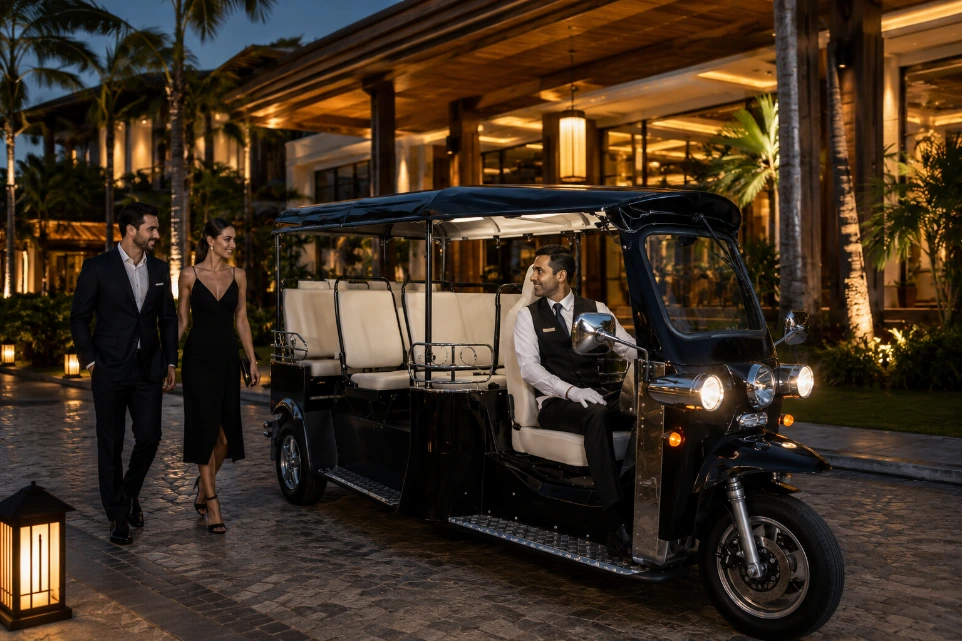
For a hotel, resort or destination, the route is operational—but the arrival, vehicle presentation, driver interaction and consistency shape how the service is remembered.
Configuration review
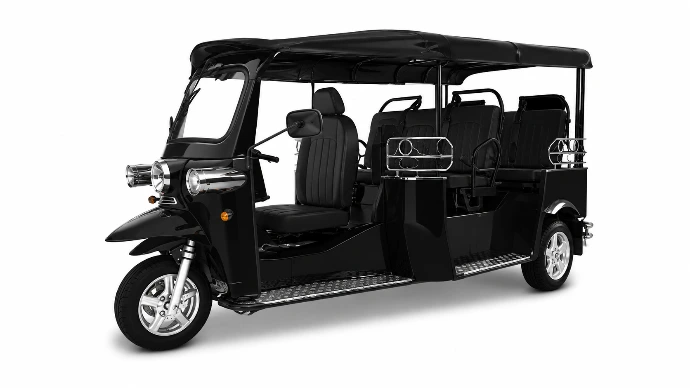
Appearance, seating finishes, weather protection, graphics and operating accessories may be considered after the core route, load and charging requirements are understood. Every selected item must be technically feasible and listed in the written proposal.
From route brief to deployment
Each step reduces uncertainty before the vehicle is placed into passenger service.
Map passenger demand, locations, peak windows and current mobility gaps.
Document route, stops, distance, grades, surfaces and traffic exposure.
Estimate trip cycle, dwell time, wait target, shifts and fleet need.
Confirm permissions, registration, insurance, charging and operator rules.
Select vehicle, appearance, equipment, delivery and support scope.
Orient operators, test the route, monitor service and refine the plan.
Street use and responsibility
Vehicle equipment and an assigned VIN support documentation; they do not override state classification, local road rules or property operating requirements.
A state may use motorcycle, autocycle, moped, motor-driven-cycle or another three-wheel category. Confirm the category for the exact vehicle.
Confirm whether each road, crossing, parking area, path and stop is permitted for the vehicle and service model.
Confirm driver licensing, insurance, seat-belt procedures, accessibility, commercial-service rules, signage and incident procedures.
Supported ownership
The final proposal should identify which guidance, parts, service and operator resources apply to the delivered vehicle and project.
Vehicle operation, charging, inspection, passenger procedures and installed-equipment orientation.
Maintenance, diagnostic and escalation contacts appropriate to the selected configuration.
Replacement-parts pathway and fleet spare-parts recommendations where applicable.
Route coverage, charging rotation, service continuity and expansion considerations for multi-vehicle operations.
Electric shuttle FAQ
These answers separate the passenger vehicle, shuttle operation and industry-specific application.
An electric shuttle is a passenger service that uses an electric vehicle on a defined short-distance route or within a defined operating area. A complete shuttle plan includes the vehicle, stops, demand, trip cycle, charging, operator, passenger procedures and required permissions.
The current eTuk USA passenger configuration seats six passengers plus one driver (6+1). Confirm the delivered seating, restraints, payload, luggage and accessibility requirements in the final vehicle specification.
Strong use cases include hotels, resorts, campuses, parking connections, events, venues, destination properties and tours with repeatable short trips, controlled stops and a practical charging location.
Document distance, grades, surfaces, traffic exposure, public or private roads, approved stops, trip time, dwell time, peak passenger demand, luggage, accessibility, operating hours, weather and an alternate route. Then verify the vehicle and permissions against that route.
Range is configuration- and route-specific. Passenger load, grades, speed, stops, weather, battery condition and driving pattern all matter. Confirm the selected battery and use a route-based energy estimate with an operating reserve; do not treat a general brochure figure as a guarantee.
Confirm the vehicle charger, circuit, connector and charging time, then compare them with the parking location, operating shifts, daily route demand and available charging windows. Include reserve capacity and a response plan for interruptions.
Each delivered eTuk passenger vehicle is configured as street-ready and assigned an individual 17-character VIN. The responsible state or local authority still determines title, registration, licensing, insurance and permitted roads.
No. The federal Low-Speed Vehicle definition applies to four-wheeled vehicles. State terminology for a three-wheel eTuk may include motorcycle, autocycle, moped, motor-driven-cycle or another category. Confirm the final classification and permitted roads with the responsible authority.
The passenger tuk tuk page explains the L5 Limo GT vehicle. This electric shuttle page explains route and service planning across applications. The hospitality shuttle page focuses specifically on hotels, resorts, guest experience and hospitality operations.
Contact eTuk USA with the property or service area, route, stops, passenger groups, peak demand, operating schedule, charging location, accessibility needs, launch timing and budget range. The team can help organize the vehicle and deployment review.
Tell us where the shuttle would operate, who it needs to move, when demand is highest and where the vehicle can charge. eTuk USA will help identify the right vehicle and next planning step.