Vehicle Platform
eTuk USA defines and supports electric three-wheel vehicle platforms for passenger movement, cargo work and customer-facing commercial use.
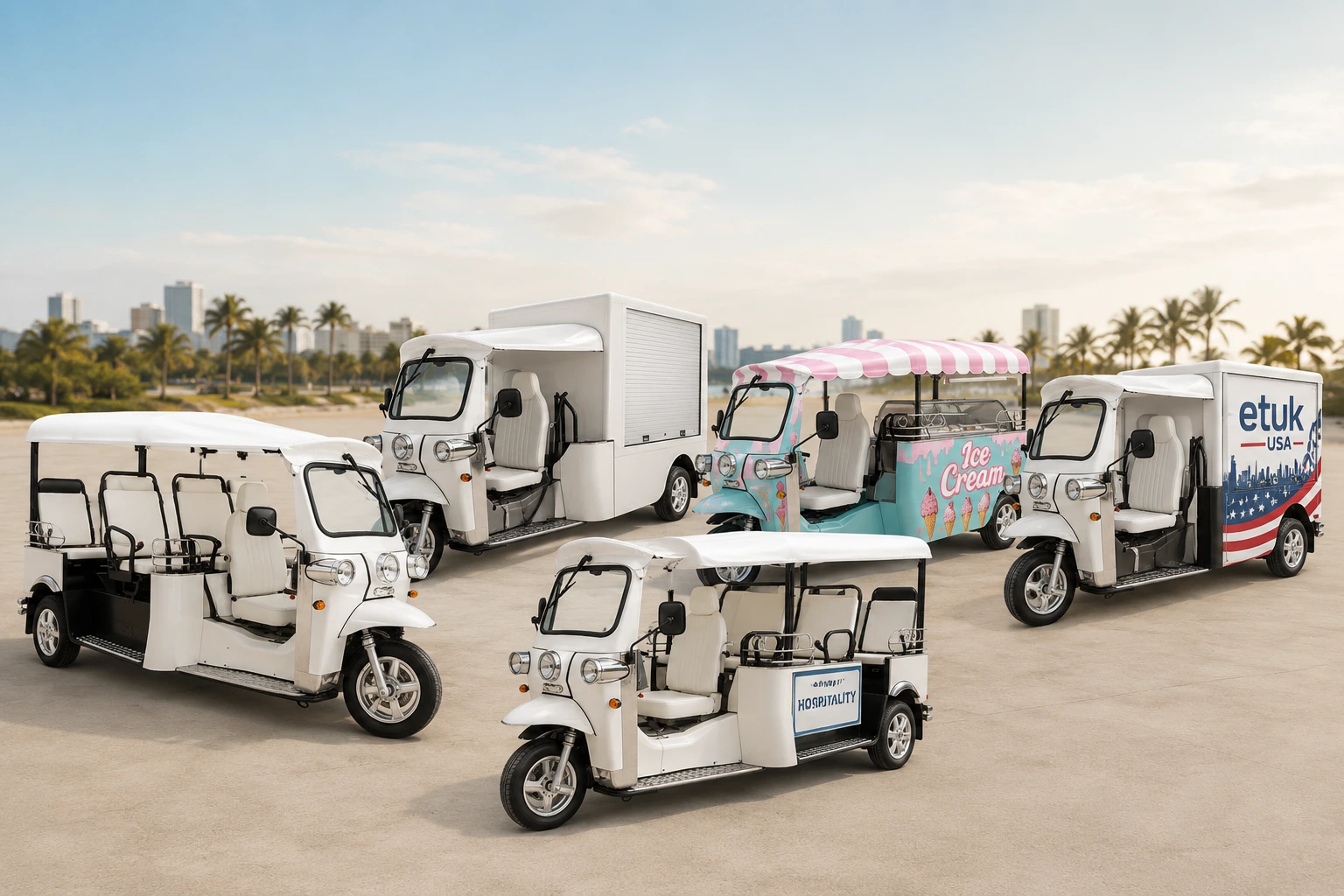
Manufacturer, importer, builder and solution provider
eTuk USA is a U.S. manufacturer, importer, builder and solution provider for electric passenger, cargo and vending tuk tuks and commercial electric mobility projects. We help buyers define the job, select the appropriate platform, document the configuration and plan a supported deployment.
What eTuk USA does
An eTuk project begins with the operating requirement. Vehicle selection, commercial equipment, documentation, delivery and support must then work together.
eTuk USA defines and supports electric three-wheel vehicle platforms for passenger movement, cargo work and customer-facing commercial use.
We coordinate the U.S. vehicle path and the documentation needed to identify the delivered configuration and its intended operating use.
Body, storage, equipment, finishes, graphics and other project elements can be organized around an approved vehicle configuration.
We help connect the vehicle to the route, property, service workflow, charging plan, delivery scope and ownership support pathway.
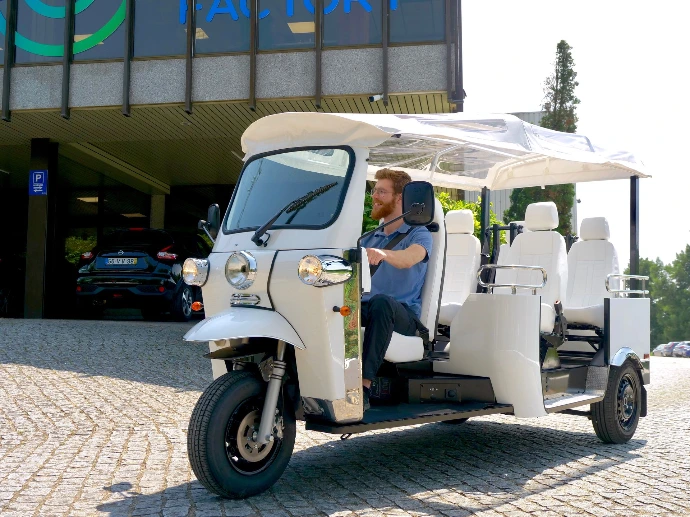
Our operating principle
Customers may need guest transportation, tools and cargo movement, mobile vending, a branded activation or a larger fleet program. The visible vehicle is only one part of that system.
Our role is to help turn that need into an understandable vehicle and project scope without presenting one configuration, registration category or operating rule as universal.
Vehicle and solution categories
Each landing page answers a different product question. Use the category closest to the job, then confirm the final specification in writing.
A 6+1 passenger platform for hospitality, tours, campuses, events and defined short-distance transportation.
Explore Passenger eTukA compact electric platform for tools, supplies, facilities work, delivery and specialized commercial bodies.
Explore Cargo eTukA customer-facing platform for coffee, food, beverages, retail, service and branded mobile experiences.
Explore Vending eTukA planning path for hotels, resorts, campuses, events, destinations and other defined passenger routes.
Explore Electric ShuttleHow a project develops
Clear inputs reduce configuration mistakes and help distinguish vehicle price from the cost of a complete commercial project.
Identify the job, capacity, route, location, duty cycle, timeline and desired outcome.
Select the platform, body, equipment, graphics, accessories and documentation requirements.
Confirm the approved configuration, included items, exclusions, price and delivery scope in writing.
Coordinate deployment and connect the owner with relevant parts, service and technical pathways.
Street-ready and VIN-assigned
When those facts are included in the delivered specification, an eTuk may be described as street-ready and VIN-assigned. State and local authorities still determine titling, registration classification, driver requirements, insurance and permitted roads for the exact vehicle and route.
Federal terminology matters: 49 CFR § 571.3 defines a federal low-speed vehicle as four-wheeled and defines a motorcycle as a powered vehicle designed to travel on no more than three wheels. Regulatory reference reviewed August 26, 2026.
Support beyond selection
Support requirements vary by vehicle, commercial equipment, location and operating model. They should be included in project planning rather than treated as an afterthought.
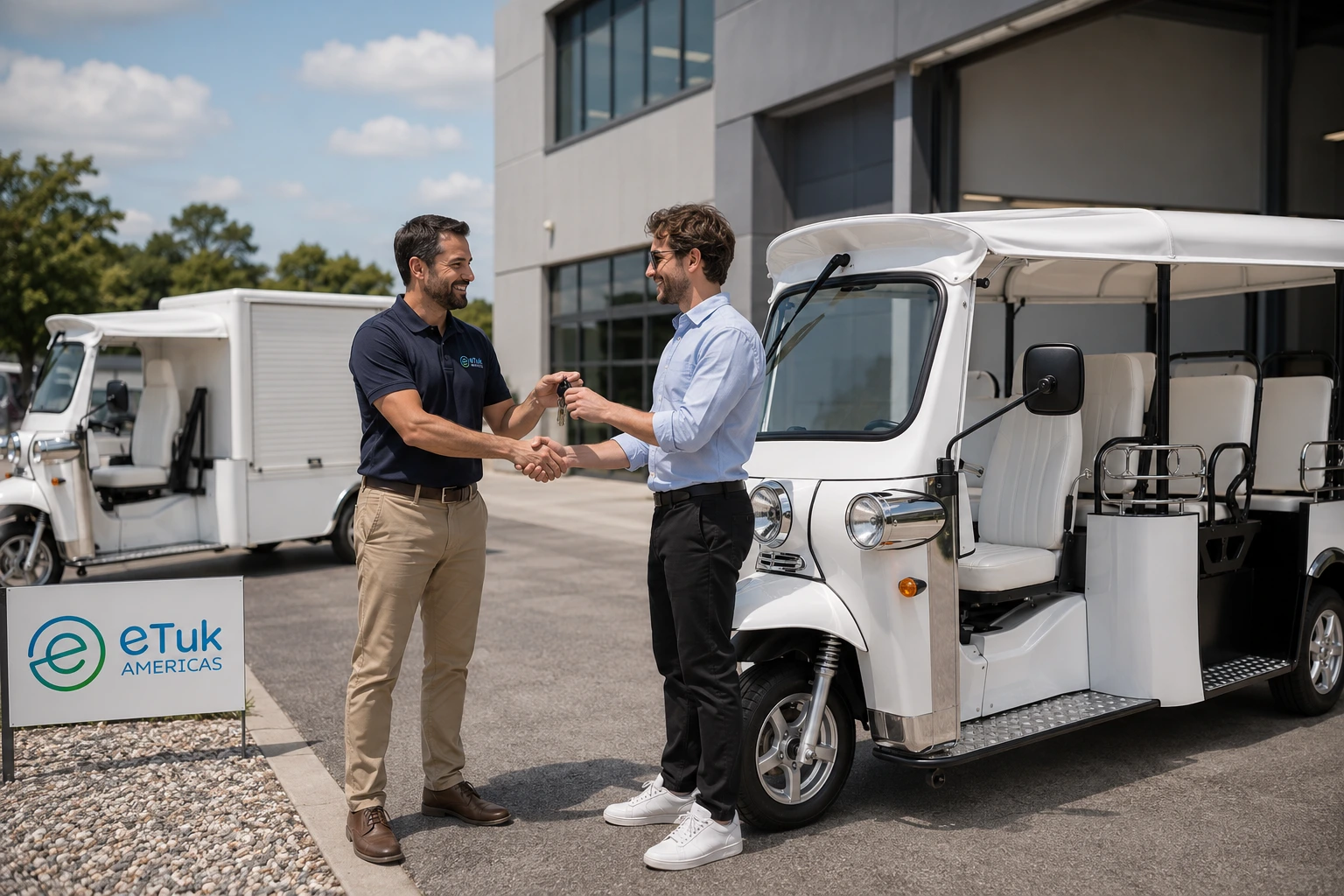
Vehicle preparation, logistics and operating readiness belong in the same written project scope.
Organize the vehicle information needed for registration, insurance and operating discussions with the responsible authorities.
Coordinate destination, timing, receiving requirements and other logistics included in the approved scope.
Identify the vehicle and component information needed when requesting replacement or service parts.
Route operating, maintenance and troubleshooting questions through the appropriate support channel.
Define the vehicle and project price before discussing financing pathways available to qualified buyers.
Evaluate duty cycles, charging, standardization, delivery phases and support needs for multi-vehicle projects.
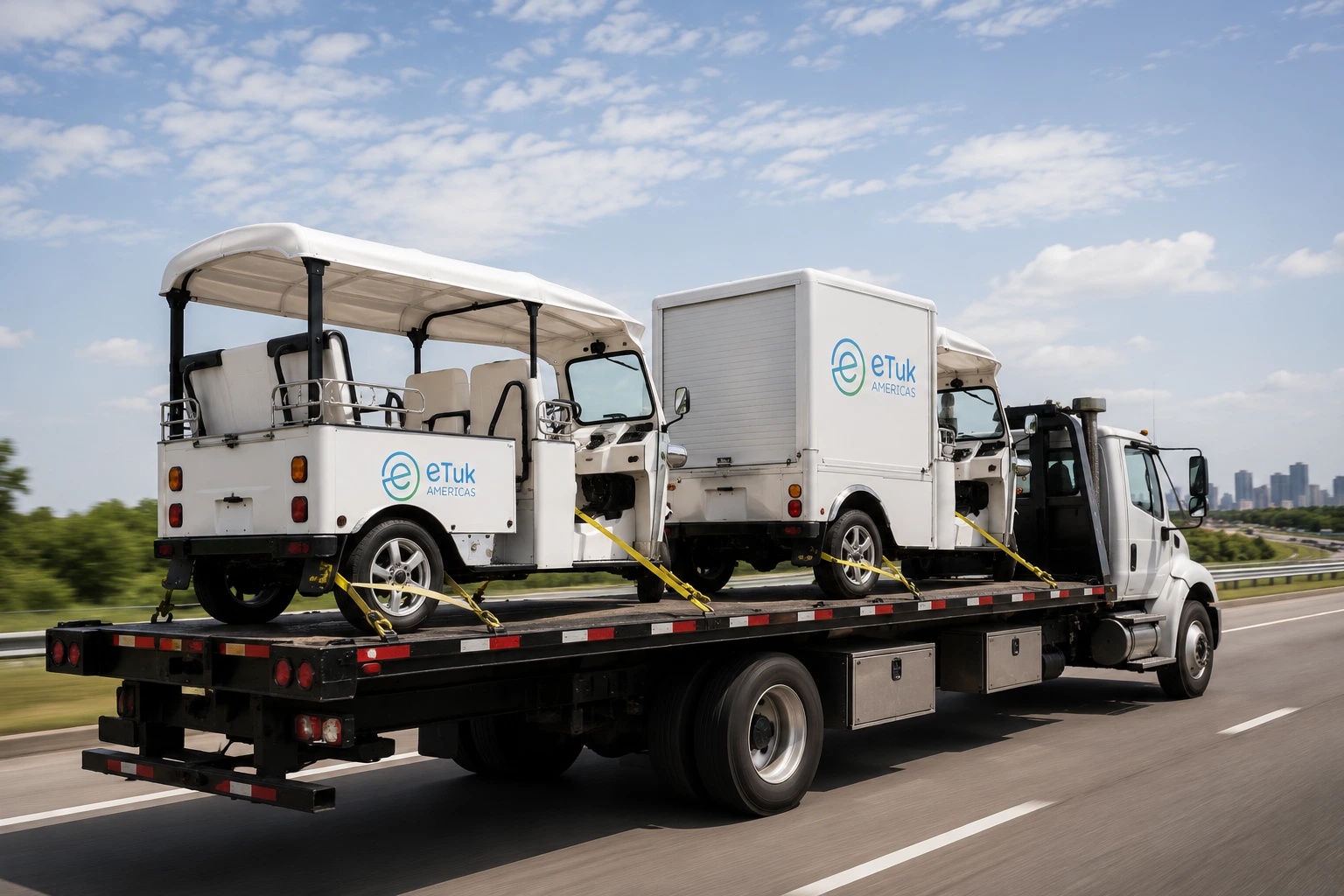
Share the operating location, route or service environment, required capacity or equipment, expected quantity and target timing. We will help identify the appropriate next step.