
Skip to Content
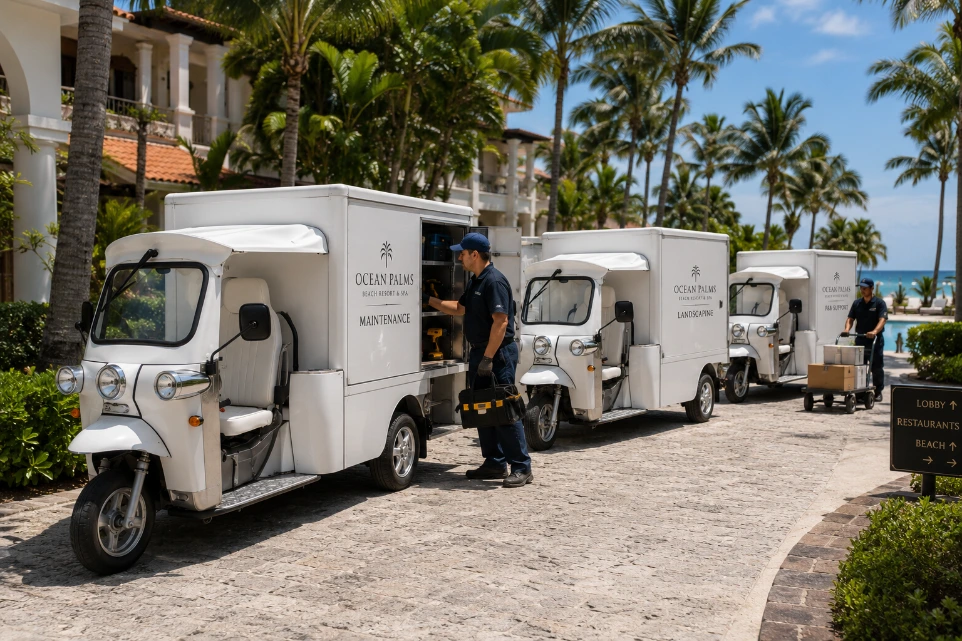
Electric eTuk vehicles illustrating a municipal electric vehicle fleet

Public-sector fleet planning

Municipal Electric Vehicle Fleets

Municipal electric vehicle fleets can combine passenger transportation and cargo eTuks around clearly defined public operations such as downtown mobility, parks, community events, visitor transportation and service workflows. Fleet planning should begin with the jobs, routes, departments, demand, procurement requirements and operating responsibilities.

100% electric Passenger and cargo applications Multi-vehicle planning Commercial fleet consultation

Fleet configuration, vehicle quantity, road access, operating authority, procurement requirements and delivery scope must be confirmed for the specific municipality and written proposal.

Direct answer

How should a municipality plan an electric vehicle fleet?

Start by identifying every municipal job the fleet needs to perform. Separate passenger transportation from cargo or service operations, map each route, estimate demand and operating hours, then match vehicle quantity and configuration to those requirements.

  1. List the departments and public-service roles.
  2. Map every route, destination and operating zone.
  3. Separate passenger demand from cargo workflows.
  4. Estimate fleet quantity and operating coverage.
  5. Plan charging, storage, staffing and procurement.
Passenger

Community Mobility

Evaluate approved transportation roles around actual routes and users.

Operations

Cargo Workflows

Match cargo configuration to documented municipal loads and service tasks.

Fleet

Vehicle Quantity

Calculate quantity from routes, utilization and operating coverage.

Procurement

Written Scope

Define vehicles, configuration, delivery and acceptance requirements.

Municipal fleet roles

One fleet can support several clearly separated public-service jobs.

A vehicle assigned to passenger transportation should not automatically define the configuration used for municipal cargo work.

01 / DOWNTOWN

District Mobility

Evaluate approved short-distance movement around public destinations and districts.

02 / PARKS

Park Transportation

Support appropriate passenger or operational mobility within defined properties.

03 / VISITORS

Public Destination Mobility

Connect approved visitor destinations through defined transportation routes.

04 / EVENTS

Community Event Support

Deploy passenger or operational vehicles according to event requirements.

05 / FACILITIES

Operational Support

Match cargo vehicles to supplies, equipment and facility workflows.

06 / PILOTS

Fleet Evaluation

Start with a defined operating scope before expanding fleet quantity.

Electric eTuk fleet illustrating municipal passenger mobility
Fleet quantity should be based on actual routes, departments, demand, operating hours and required coverage.

Operations before quantity

Do not start municipal fleet planning with a vehicle count.

The correct fleet size follows the work. A municipality may have passenger routes operating during defined windows while facilities teams require vehicles on a completely different schedule.

Document each operational role independently, then combine the requirements into one fleet plan. This creates a stronger basis for procurement, charging, staffing and future expansion.

  • Departments and responsible fleet users
  • Passenger routes and destinations
  • Cargo and facilities workflows
  • Daily and seasonal operating hours
  • Peak demand and required coverage
  • Charging locations and available downtime
  • Vehicle storage and security
  • Procurement and acceptance requirements

Fleet configuration

Match each municipal role to the appropriate eTuk platform.

Current municipal planning should focus on available passenger and cargo applications.

Passenger electric eTuk for municipal fleet transportation

Passenger eTuk

Evaluate passenger vehicles for appropriate approved downtown, park, visitor, community and event transportation roles.

Explore Passenger eTuk →
Cargo electric eTuk illustrating municipal fleet operations

Cargo eTuk

Evaluate cargo vehicles around documented supplies, equipment, facilities and public-service workflows.

Explore Cargo eTuk →

Procurement readiness

Build a procurement scope that describes the job, not only the vehicle.

A stronger fleet request identifies users, routes, loads, quantities, acceptance and support.

01 / OPERATIONS

Define Use Cases

Document the department, users, route and service role for each vehicle type.

02 / CONFIGURATION

Write Requirements

Define passenger or cargo configuration and required equipment.

03 / QUANTITY

Calculate Fleet Size

Match vehicle count to demand, operating coverage and schedules.

04 / COMMERCIAL

Confirm Purchase Scope

Define pricing, delivery, acceptance, support and procurement requirements.

Fleet planning pathway

From municipal need to a qualified fleet proposal.

Build the fleet around measured operational requirements.

  1. STEP 01

    Inventory the Jobs

    List departments, users, routes, public purposes and workflows.

  2. STEP 02

    Measure Demand

    Document passengers, loads, schedules and required coverage.

  3. STEP 03

    Configure Fleet

    Select platform, quantity, equipment and charging strategy.

  4. STEP 04

    Procure

    Confirm commercial scope, approvals, delivery and acceptance.

Responsible public fleet deployment

Fleet procurement does not replace route and operating review.

Each vehicle role must still be evaluated for its specific route and operating environment.

ROUTES

Verify Operation

Review road ownership, operating zones, traffic conditions and permitted use.

PEOPLE

Assign Responsibility

Define drivers, supervisors, charging and daily fleet ownership.

ASSETS

Plan Storage

Document charging locations, storage, security and cleaning.

PROCUREMENT

Write Acceptance

Define vehicle configuration, delivery and acceptance requirements.

Municipal fleet FAQ

Questions for public-sector fleet teams.

Use these answers to qualify fleet roles, quantity, procurement and operating requirements.

What can a municipal eTuk fleet be used for?

Potential applications include approved downtown transportation, park mobility, visitor services, community events and defined cargo or facilities operations.

Can a municipal fleet include different eTuk configurations?

Yes. Passenger and cargo applications should be evaluated according to the specific job each vehicle must perform.

How many passenger eTuks does a municipality need?

Quantity depends on routes, passenger demand, departure frequency, operating hours and required service coverage.

How many passengers can the current passenger eTuk carry?

The current eTuk USA passenger configuration provides seating for six passengers plus one driver.

Can cargo eTuks be included in a municipal fleet?

Cargo eTuks can be evaluated for defined municipal loads and operational workflows. Load, access and route requirements should be documented before configuration.

Can a municipality begin with a smaller pilot fleet?

A defined initial deployment can help a municipality evaluate an operating use case before considering broader fleet expansion.

Does eTuk USA support multi-vehicle purchases?

eTuk USA provides fleet sales support for buyers evaluating multiple vehicles and configurations.

Where can a municipality review eTuk pricing?

Use the eTuk USA pricing, inventory, model comparison and fleet sales pages to evaluate purchase options.

What information is needed for a municipal fleet quote?

Provide the municipality, departments, use cases, routes, passenger or cargo requirements, operating schedule, quantity, equipment needs, procurement requirements and target timing.

Turn municipal operating requirements into a qualified eTuk fleet plan.

Share the departments, use cases, routes, passenger or cargo requirements, operating hours, quantity, charging, procurement requirements and target timing.