Passenger eTuk
Choose it for guest transportation, tours, events, campuses and other short-distance passenger applications.
Passenger details →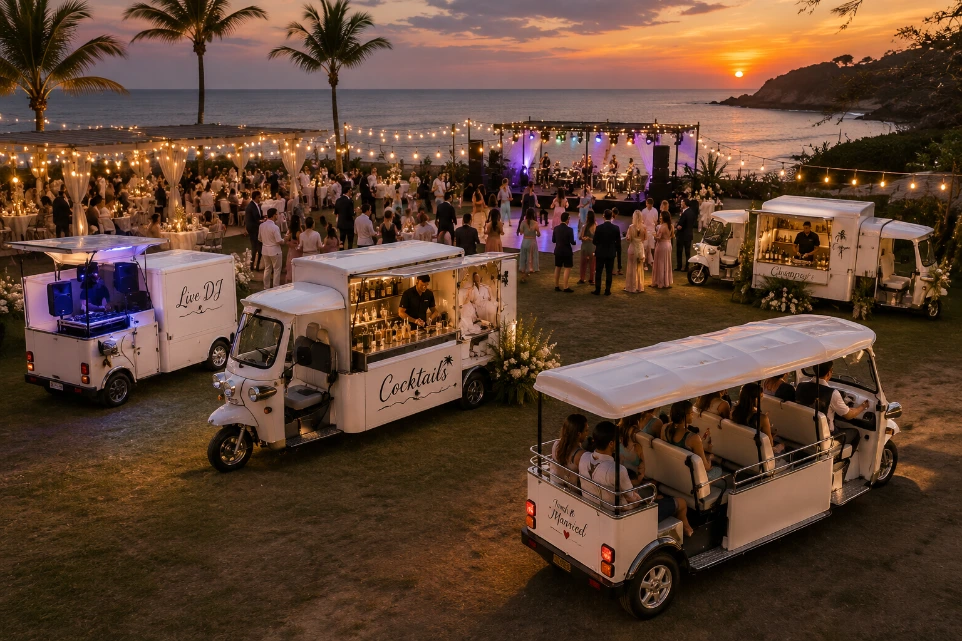
Electric tuk tuk comparison guide
Choose the Passenger eTuk when the primary job is moving people, Cargo when it is moving protected tools or supplies, and Vendo when the vehicle becomes a customer-facing mobile business. Electric Shuttle is not a separate body category—it is an operating solution built around the Passenger platform, a defined route, passenger demand, charging, staffing and permissions.
Start with the job and operating environment, then compare body, capacity, price status, charging, registration, configuration and support. Final specifications and pricing must be confirmed in writing.
Fast selection answer
If two categories appear to fit, document the daily workflow and required load before selecting the final architecture.
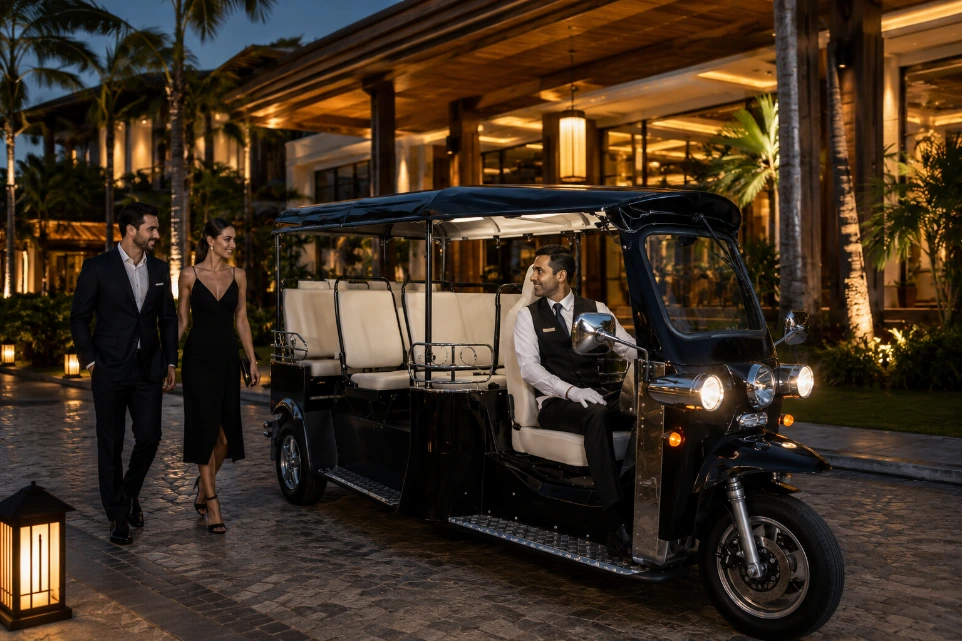
Choose it for guest transportation, tours, events, campuses and other short-distance passenger applications.
Passenger details →Choose it for enclosed transport of tools, supplies, equipment and goods in commercial operations.
Cargo details →Choose it when the vehicle must support sales, food or beverage service, retail or branded activation.
Vendo details →Choose this planning pathway when the project is a repeatable passenger service with stops and demand.
Shuttle planning →Published eTuk directions
Passenger, Cargo and Vendo are vehicle directions. Electric Shuttle describes how a Passenger vehicle can be deployed as a transportation service.
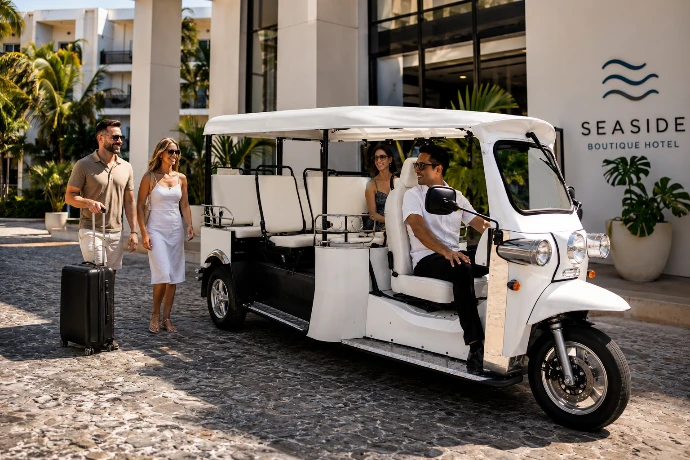
Street-ready, VIN-assigned passenger platform for six passengers plus one driver.
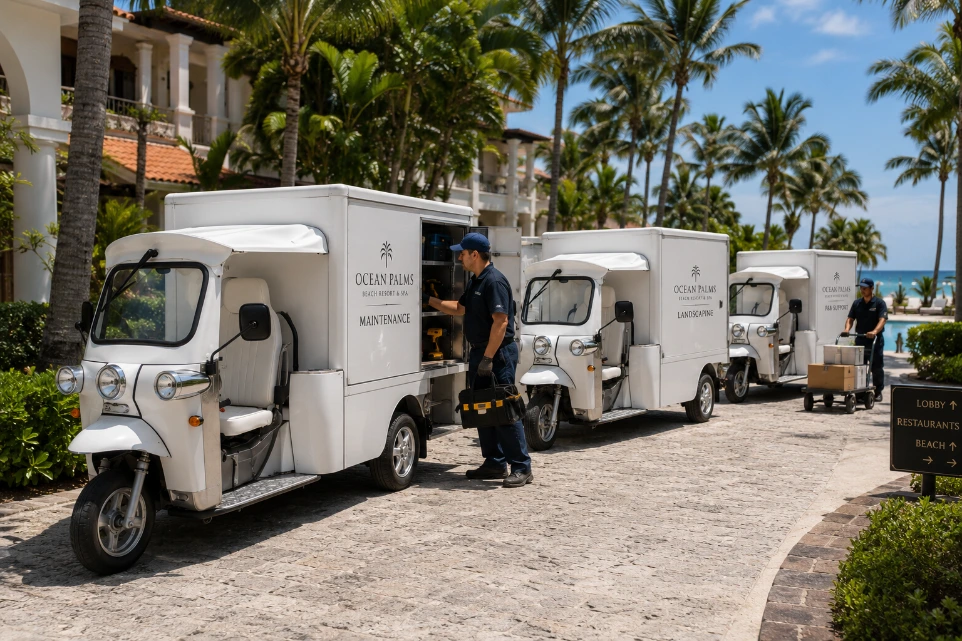
Electric utility platform with an enclosed cargo body for tools, supplies and commercial work.
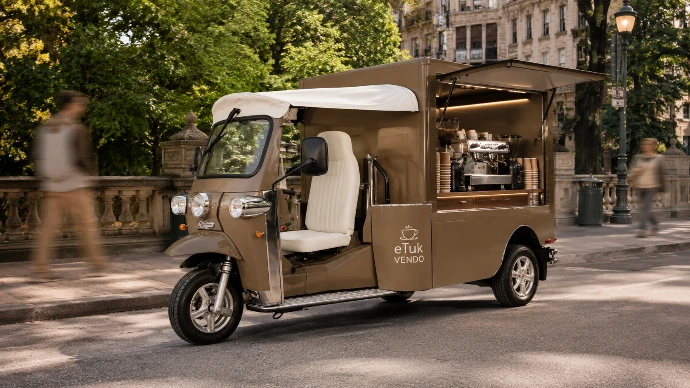
Customer-facing mobile platform for coffee, ice cream, beverages, food, retail and activations.
A passenger service planned around route, stops, demand, charging, operator and permissions.
Side-by-side comparison
Use this as a qualification table. The detailed category pages and written proposal control final specifications.
| Comparison | Passenger | Cargo | Vendo | Electric Shuttle |
|---|---|---|---|---|
| What it is | Passenger vehicle category | Enclosed utility vehicle category | Customer-facing commercial vehicle category | Passenger operating solution |
| Primary job | Move people | Move protected tools, supplies or goods | Serve or sell to customers | Operate repeatable passenger trips |
| Capacity or body | Six passengers plus one driver (6+1) | Configurable enclosed cargo body | Service body configured around concept and workflow | Passenger platform matched to route and demand |
| Public price status | $27,999 MSRP | $24,999 standard-configuration MSRP | Written custom quote | Passenger vehicle plus route and deployment scope |
| Strong applications | Hotels, resorts, tours, events and campuses | Facilities, maintenance, hospitality operations and short-route logistics | Coffee, ice cream, beverages, food, retail and activations | Hotels, campuses, parking connections, events and destinations |
| Define first | Passenger demand, route, boarding, luggage and weather | Payload, cargo dimensions, access, storage and duty cycle | Menu, equipment, power, water, storage, permits and workflow | Stops, distance, frequency, demand, charging, staffing and permissions |
| Best next page | Passenger details → | Cargo details → | Vendo details → | Shuttle planning → |
Decision path
Follow the first answer that accurately describes the vehicle's primary work.
Start with Passenger. If those trips repeat along a defined service pattern, continue into Electric Shuttle planning.
Start with Passenger →Start with Cargo when tools, supplies, equipment or goods need a protected working body.
Start with Cargo →Start with Vendo when counters, equipment, storage, menu workflow and branding define the project.
Start with Vendo →Document the primary and secondary workflows, load and operating area before requesting configuration guidance.
Discuss the mixed use case →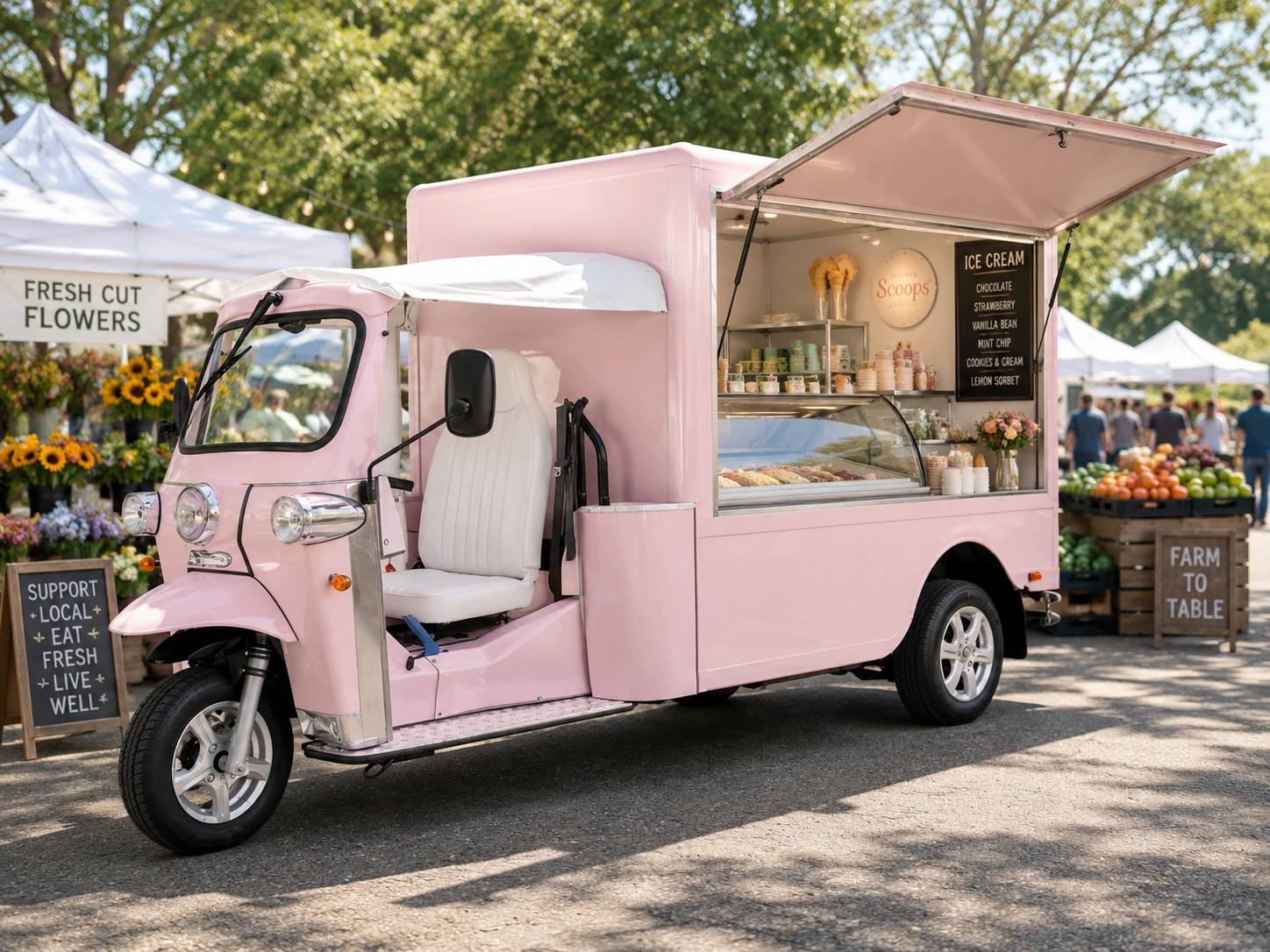
Cargo or Vendo?
Cargo is designed primarily to move and protect operational items. Vendo is designed around customer-facing service or sales. Once people are served at the vehicle, the project may need counters, openings, storage, appliances, power, water, refrigeration, sanitation, branding and a defined workflow.
Comparison beyond the body
The correct architecture must fit the complete operating system, not only the preferred image.
People moved, work completed, customers served or route operated.
Passengers, luggage, tools, product, water, appliances and storage.
Private or public roads, distance, grades, surfaces, width and traffic.
Parking, circuit, schedule, reserve and auxiliary equipment demand.
State classification, licensing, insurance, roads and commercial approvals.
Rain, sun, temperature, wind, comfort and operating limitations.
Vehicle, options, delivery, taxes, launch costs and ownership pathway.
Operator guidance, maintenance, parts, downtime and fleet planning.
Price comparison
A lower number is not necessarily a lower project cost if it excludes required equipment, delivery, documentation or operating readiness. Use the written proposal to compare the same body, equipment and support scope.
$27,999 MSRP before additional options and project costs.
$24,999 standard-configuration MSRP before special equipment and project costs.
Written custom quote after concept, body and equipment scope are defined.
Passenger vehicle price plus the equipment and deployment requirements of the route.
From comparison to proposal
Each step narrows the project before final vehicle configuration and pricing.
State the primary job, operating location, load and desired outcome.
Use body, capacity, workflow and price status to select a direction.
Check route, charging, registration, insurance and commercial rules.
Define equipment, appearance, delivery and ownership support scope.
Review the written vehicle specification, price, exclusions and timing.
Model comparison FAQ
These answers distinguish vehicle categories from operating solutions.
Choose Passenger to move people, Cargo to move protected tools or supplies, and Vendo to serve or sell to customers. Choose the Electric Shuttle planning pathway when a Passenger vehicle will operate repeatable trips on a defined route.
Passenger is the vehicle category and seats six passengers plus one driver (6+1). Electric Shuttle is an operating solution built around a Passenger vehicle, route, stops, demand, charging, staffing, passenger procedures and required permissions.
Cargo primarily moves and protects tools, supplies, equipment or goods. Vendo is configured for customer-facing sales or service and may require counters, openings, storage, appliances, power, water, refrigeration, sanitation features, branding and workflow planning.
Passenger has a $27,999 MSRP and the standard Cargo configuration has a $24,999 MSRP, both subject to change. Vendo requires a custom written quote. Shuttle pricing uses the Passenger vehicle price plus the selected equipment and deployment scope.
The current eTuk USA Passenger configuration seats six passengers plus one driver (6+1). Confirm seating, restraints, payload, luggage and accessibility requirements in the final specification.
It depends on the job. Passenger or Electric Shuttle supports guest movement, Cargo supports facilities and operational supplies, and Vendo supports poolside, event or destination food, beverage and retail service.
Vendo is the appropriate starting direction because the vehicle must support customer service, commercial equipment, storage, power, water or refrigeration as required. The exact body and price depend on the approved concept.
Delivered eTuk vehicles are configured as street-ready and assigned an individual VIN when stated in the final specification. The responsible authority still determines title, registration class, licensing, insurance and permitted roads.
No. Compare the job, body, load, equipment, route, charging, delivery, documentation and support scope. MSRP is planning information for a reference configuration and does not represent every project cost.
Send eTuk USA the intended use, location, route or property, passenger or load requirement, equipment, charging plan, delivery destination, target launch and budget range. The team can help identify and quote the appropriate direction.
Tell us who or what the vehicle must move, where it will operate and what equipment it needs. eTuk USA will help identify the right direction and written next step.
Electric tuk tuk comparison guide
Choose the Passenger eTuk when the primary job is moving people, Cargo when it is moving protected tools or supplies, and Vendo when the vehicle becomes a customer-facing mobile business. Electric Shuttle is not a separate body category—it is an operating solution built around the Passenger platform, a defined route, passenger demand, charging, staffing and permissions.
Start with the job and operating environment, then compare body, capacity, price status, charging, registration, configuration and support. Final specifications and pricing must be confirmed in writing.
Fast selection answer
If two categories appear to fit, document the daily workflow and required load before selecting the final architecture.
Choose it for guest transportation, tours, events, campuses and other short-distance passenger applications.
Passenger details →Choose it for enclosed transport of tools, supplies, equipment and goods in commercial operations.
Cargo details →Choose it when the vehicle must support sales, food or beverage service, retail or branded activation.
Vendo details →Choose this planning pathway when the project is a repeatable passenger service with stops and demand.
Shuttle planning →Published eTuk directions
Passenger, Cargo and Vendo are vehicle directions. Electric Shuttle describes how a Passenger vehicle can be deployed as a transportation service.
Street-ready, VIN-assigned passenger platform for six passengers plus one driver.
Electric utility platform with an enclosed cargo body for tools, supplies and commercial work.
Customer-facing mobile platform for coffee, ice cream, beverages, food, retail and activations.
A passenger service planned around route, stops, demand, charging, operator and permissions.
Side-by-side comparison
Use this as a qualification table. The detailed category pages and written proposal control final specifications.
| Comparison | Passenger | Cargo | Vendo | Electric Shuttle |
|---|---|---|---|---|
| What it is | Passenger vehicle category | Enclosed utility vehicle category | Customer-facing commercial vehicle category | Passenger operating solution |
| Primary job | Move people | Move protected tools, supplies or goods | Serve or sell to customers | Operate repeatable passenger trips |
| Capacity or body | Six passengers plus one driver (6+1) | Configurable enclosed cargo body | Service body configured around concept and workflow | Passenger platform matched to route and demand |
| Public price status | $27,999 MSRP | $24,999 standard-configuration MSRP | Written custom quote | Passenger vehicle plus route and deployment scope |
| Strong applications | Hotels, resorts, tours, events and campuses | Facilities, maintenance, hospitality operations and short-route logistics | Coffee, ice cream, beverages, food, retail and activations | Hotels, campuses, parking connections, events and destinations |
| Define first | Passenger demand, route, boarding, luggage and weather | Payload, cargo dimensions, access, storage and duty cycle | Menu, equipment, power, water, storage, permits and workflow | Stops, distance, frequency, demand, charging, staffing and permissions |
| Best next page | Passenger details → | Cargo details → | Vendo details → | Shuttle planning → |
Decision path
Follow the first answer that accurately describes the vehicle's primary work.
Start with Passenger. If those trips repeat along a defined service pattern, continue into Electric Shuttle planning.
Start with Passenger →Start with Cargo when tools, supplies, equipment or goods need a protected working body.
Start with Cargo →Start with Vendo when counters, equipment, storage, menu workflow and branding define the project.
Start with Vendo →Document the primary and secondary workflows, load and operating area before requesting configuration guidance.
Discuss the mixed use case →Cargo or Vendo?
Cargo is designed primarily to move and protect operational items. Vendo is designed around customer-facing service or sales. Once people are served at the vehicle, the project may need counters, openings, storage, appliances, power, water, refrigeration, sanitation, branding and a defined workflow.
Comparison beyond the body
The correct architecture must fit the complete operating system, not only the preferred image.
People moved, work completed, customers served or route operated.
Passengers, luggage, tools, product, water, appliances and storage.
Private or public roads, distance, grades, surfaces, width and traffic.
Parking, circuit, schedule, reserve and auxiliary equipment demand.
State classification, licensing, insurance, roads and commercial approvals.
Rain, sun, temperature, wind, comfort and operating limitations.
Vehicle, options, delivery, taxes, launch costs and ownership pathway.
Operator guidance, maintenance, parts, downtime and fleet planning.
Price comparison
A lower number is not necessarily a lower project cost if it excludes required equipment, delivery, documentation or operating readiness. Use the written proposal to compare the same body, equipment and support scope.
$27,999 MSRP before additional options and project costs.
$24,999 standard-configuration MSRP before special equipment and project costs.
Written custom quote after concept, body and equipment scope are defined.
Passenger vehicle price plus the equipment and deployment requirements of the route.
From comparison to proposal
Each step narrows the project before final vehicle configuration and pricing.
State the primary job, operating location, load and desired outcome.
Use body, capacity, workflow and price status to select a direction.
Check route, charging, registration, insurance and commercial rules.
Define equipment, appearance, delivery and ownership support scope.
Review the written vehicle specification, price, exclusions and timing.
Model comparison FAQ
These answers distinguish vehicle categories from operating solutions.
Choose Passenger to move people, Cargo to move protected tools or supplies, and Vendo to serve or sell to customers. Choose the Electric Shuttle planning pathway when a Passenger vehicle will operate repeatable trips on a defined route.
Passenger is the vehicle category and seats six passengers plus one driver (6+1). Electric Shuttle is an operating solution built around a Passenger vehicle, route, stops, demand, charging, staffing, passenger procedures and required permissions.
Cargo primarily moves and protects tools, supplies, equipment or goods. Vendo is configured for customer-facing sales or service and may require counters, openings, storage, appliances, power, water, refrigeration, sanitation features, branding and workflow planning.
Passenger has a $27,999 MSRP and the standard Cargo configuration has a $24,999 MSRP, both subject to change. Vendo requires a custom written quote. Shuttle pricing uses the Passenger vehicle price plus the selected equipment and deployment scope.
The current eTuk USA Passenger configuration seats six passengers plus one driver (6+1). Confirm seating, restraints, payload, luggage and accessibility requirements in the final specification.
It depends on the job. Passenger or Electric Shuttle supports guest movement, Cargo supports facilities and operational supplies, and Vendo supports poolside, event or destination food, beverage and retail service.
Vendo is the appropriate starting direction because the vehicle must support customer service, commercial equipment, storage, power, water or refrigeration as required. The exact body and price depend on the approved concept.
Delivered eTuk vehicles are configured as street-ready and assigned an individual VIN when stated in the final specification. The responsible authority still determines title, registration class, licensing, insurance and permitted roads.
No. Compare the job, body, load, equipment, route, charging, delivery, documentation and support scope. MSRP is planning information for a reference configuration and does not represent every project cost.
Send eTuk USA the intended use, location, route or property, passenger or load requirement, equipment, charging plan, delivery destination, target launch and budget range. The team can help identify and quote the appropriate direction.
Tell us who or what the vehicle must move, where it will operate and what equipment it needs. eTuk USA will help identify the right direction and written next step.