
Skip to Content
Electric eTuk passenger vehicles illustrating municipal mobility and public-space transportation

Municipal mobility and public operations

Electric Tuk Tuks for Municipalities

Electric eTuks can be evaluated for approved municipal applications including downtown circulation, parks, community events, visitor transportation and defined public-service or cargo operations. A responsible municipal deployment begins with the actual route, public purpose, operating authority, passengers or loads and procurement scope.

100% electric Passenger and cargo applications 6 passengers plus driver Fleet planning available

Municipal use depends on the exact vehicle, route, road authority, operating purpose and applicable local requirements. Vehicle access or registration should not be assumed without review by the appropriate authorities.

Direct answer

How can municipalities use electric tuk tuks?

Municipalities can evaluate appropriately configured electric eTuks for approved downtown circulation, park transportation, visitor mobility, community events, public-space operations and defined cargo or service work. The appropriate use depends on the vehicle, route, local authority and operating requirements.

  1. Define the public purpose and operating department.
  2. Map routes, destinations, road ownership and operating zones.
  3. Separate passenger transportation from cargo operations.
  4. Measure demand, schedule and fleet requirements.
  5. Confirm procurement, insurance and operating approvals.
Mobility

Downtown Circulation

Evaluate short-distance public mobility between approved destinations.

Parks

Visitor Movement

Plan appropriate transportation within defined public properties and destinations.

Community

Event Support

Support approved transportation and operational roles during public events.

Operations

Cargo Support

Match vehicle configuration to actual municipal loads and workflows.

Municipal applications

Start with the public-service need, not the vehicle.

Passenger mobility, visitor service and operations require different vehicle and deployment plans.

01 / DOWNTOWN

District Circulation

Evaluate approved connections between parking, commercial districts and public destinations.

02 / PARKS

Park Mobility

Plan appropriate passenger or staff movements within defined public properties.

03 / VISITORS

Destination Transportation

Support defined visitor connections where vehicle use and routes are approved.

04 / EVENTS

Community Event Mobility

Plan transportation around approved entrances, parking, programmed areas and event operations.

05 / OPERATIONS

Supplies and Equipment

Match cargo configuration to actual loads, access requirements and operating zones.

06 / PILOTS

Defined Mobility Programs

Evaluate a clearly scoped use case before expanding into a broader municipal fleet.

Electric passenger eTuks illustrating public-space and municipal mobility planning
Municipal deployment should begin with the actual map, public purpose, route authority, users and responsible operating department.

Route and purpose before vehicle

Define exactly where, why and by whom the vehicle will operate.

Public-sector applications require a clear operating scope. A downtown passenger route has different requirements from park operations, an event deployment or cargo support for a municipal department.

Map every route segment and operating zone before selecting the vehicle. Document road ownership, passenger or cargo requirements, surfaces, speeds, intersections, pedestrian interfaces, storage, charging and responsibility for daily operation.

  • Public purpose and responsible department
  • Route map and road ownership
  • Passenger, visitor or cargo requirements
  • Operating hours and peak demand
  • Surfaces, grades and pedestrian interfaces
  • Drivers, staffing and supervision
  • Charging, storage and security
  • Insurance, procurement and required approvals

Passenger and operational roles

Different municipal jobs require different eTuk configurations.

Passenger mobility and municipal cargo operations should be evaluated as separate use cases.

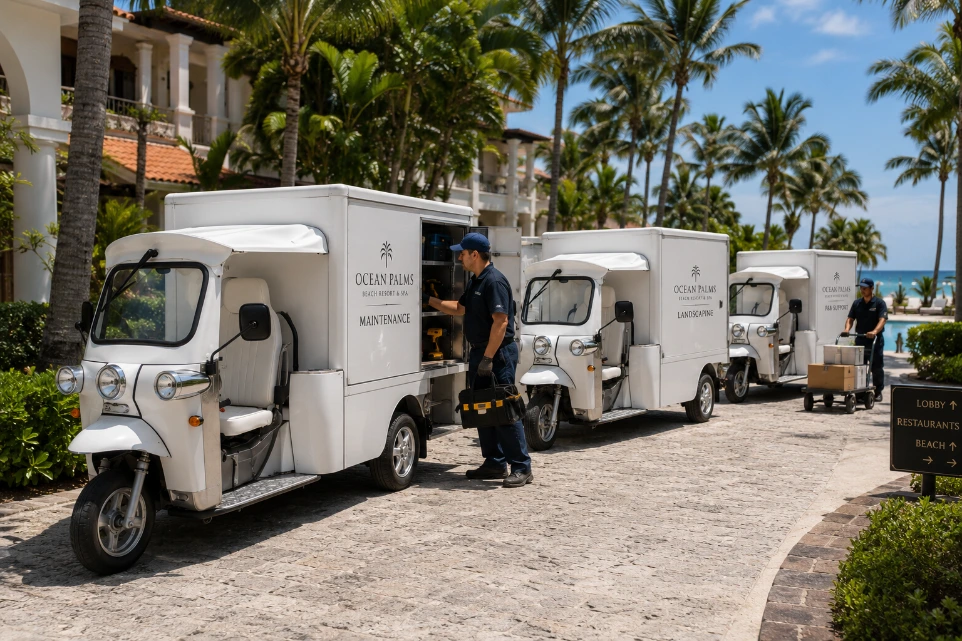
Cargo electric eTuk illustrating municipal operational support

Cargo Operations

Match cargo body, access and load requirements to defined municipal workflows.

Explore Cargo eTuk →

Public-sector planning

Turn a municipal use case into a clear procurement scope.

Vehicle selection is easier when the operating requirements have already been documented.

PURPOSE

Define the Job

Document the public need and the department responsible for the program.

ROUTE

Document Operations

Map routes, destinations, operating hours and environmental conditions.

VEHICLE

Write Requirements

Define passenger or cargo role, quantity, equipment and configuration.

PROCUREMENT

Confirm the Scope

Document pricing, delivery, acceptance, support and purchasing requirements.

Municipal deployment pathway

From public need to a qualified vehicle plan.

Define the operating system before finalizing vehicles or fleet quantity.

  1. STEP 01

    Define

    Identify the public purpose, department, users and operational problem.

  2. STEP 02

    Map

    Document routes, road ownership, destinations and operating zones.

  3. STEP 03

    Configure

    Match the appropriate passenger or cargo platform to the defined role.

  4. STEP 04

    Approve

    Complete procurement, operational, insurance and authority requirements.

Responsible municipal deployment

Verify every route and operating requirement.

Public ownership or municipal use does not automatically determine vehicle classification or road access.

AUTHORITY

Verify the Route

Confirm road ownership, permitted vehicle use, operating zones and applicable authority.

SAFETY

Protect Interfaces

Evaluate traffic, pedestrians, boarding, intersections and operating conditions.

OPERATIONS

Assign Responsibility

Define drivers, charging, storage, supervision and daily fleet management.

SCOPE

Document Requirements

Confirm vehicles, configuration, equipment, delivery and acceptance requirements.

Municipal eTuk FAQ

Questions for municipal and public-sector teams.

Use these answers to qualify the public purpose, route, vehicle role and procurement requirements.

How can municipalities use electric tuk tuks?

Potential municipal applications include approved downtown circulation, parks, visitor mobility, community events and defined passenger or cargo operations.

Can an eTuk be used for downtown transportation?

Potentially. The actual route, road authority, vehicle configuration and local operating requirements must be reviewed before operation.

Can municipalities use passenger eTuks?

Passenger eTuks can be evaluated for appropriate approved public mobility applications. The current passenger configuration provides seating for six passengers plus one driver.

Can municipalities use cargo eTuks?

Cargo eTuks can be evaluated for defined municipal loads and operational workflows. Cargo body, load requirements, securement and route conditions should be documented.

Can eTuks be used in parks?

Potentially. Suitability depends on the property, route, surfaces, operating purpose, responsible authority and applicable vehicle requirements.

Can municipalities buy multiple eTuks?

eTuk USA supports multi-vehicle and fleet discussions. Quantity should be based on the actual routes, service roles, operating schedule and required coverage.

Are electric tuk tuks street legal?

There is no single nationwide answer for every vehicle and road. Operation depends on the exact vehicle, jurisdiction and route, and applicable authorities determine final requirements.

Where can a municipality review pricing?

eTuk USA provides dedicated pricing, inventory, model comparison and fleet sales pages for buyers evaluating a purchase.

What should a municipality provide for a quote?

Provide the public purpose, department, location, routes, road ownership, passenger or cargo role, quantity, operating schedule, required equipment, procurement requirements and target timing.

Turn the municipal use case into a qualified eTuk plan.

Share the public purpose, department, routes, road ownership, passenger or cargo requirements, operating schedule, vehicle quantity, procurement needs and target timing with eTuk USA.