Can an airport use an electric tuk tuk for passenger transportation?
Potentially, on routes approved by the applicable airport and public authorities. Document every route segment, rider and luggage demand, accessibility, stops, security, staffing, registration and insurance before deployment.
Can an eTuk operate airside?
Do not assume airside approval. Airside operation requires specific written authorization and may involve security, identification, equipment, training and operating rules beyond a standard landside deployment.
How many passengers can an airport eTuk carry?
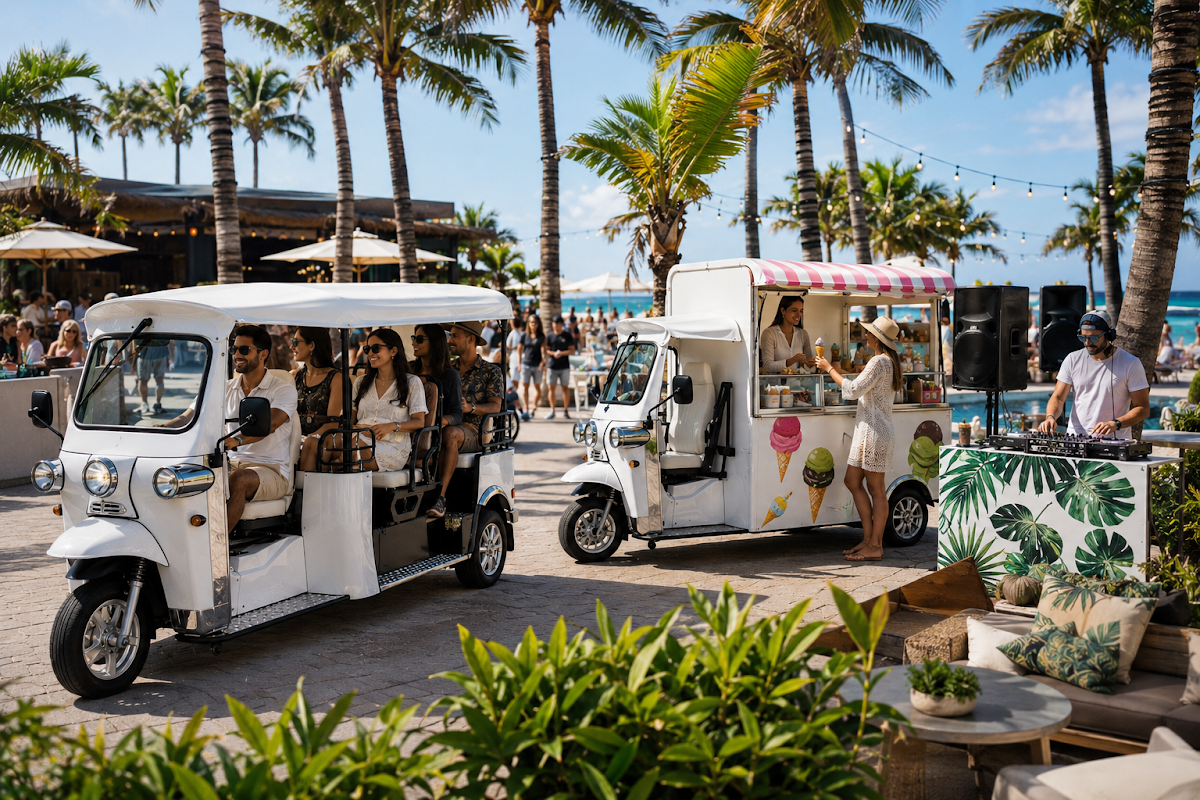
The current eTuk USA passenger configuration provides seating for six passengers plus one driver (6+1). Confirm delivered seating, restraints, luggage space, payload and boarding requirements in the final vehicle specification.
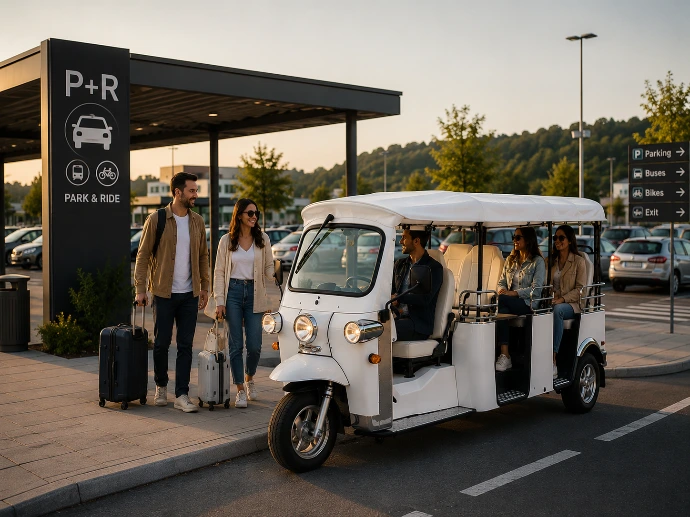
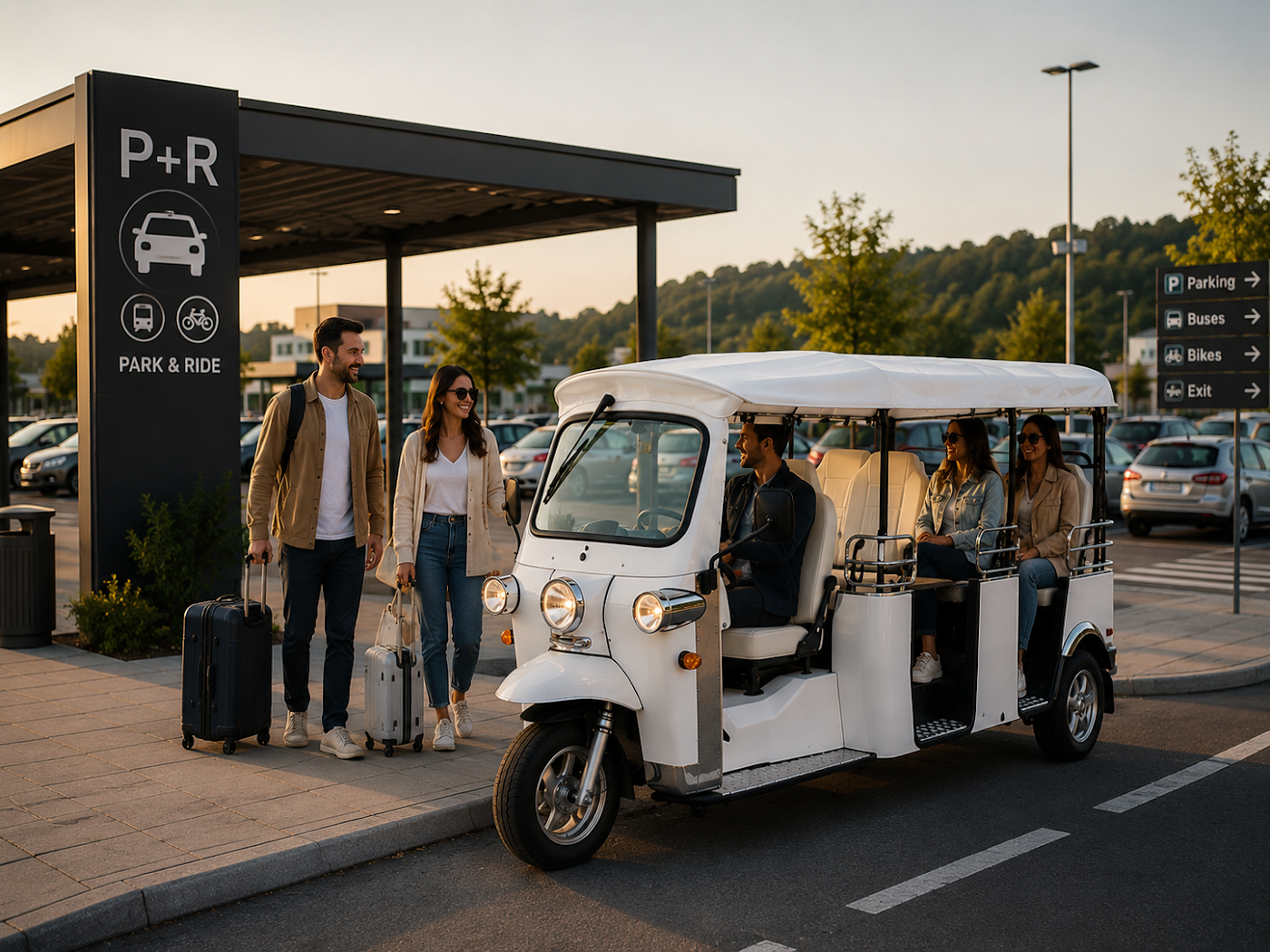
Can an eTuk connect airport parking with a terminal?
It may be evaluated for an approved short connection. Confirm road ownership, traffic interaction, curb access, stops, distance, grade, weather, passenger demand, luggage, accessibility and all operating approvals.
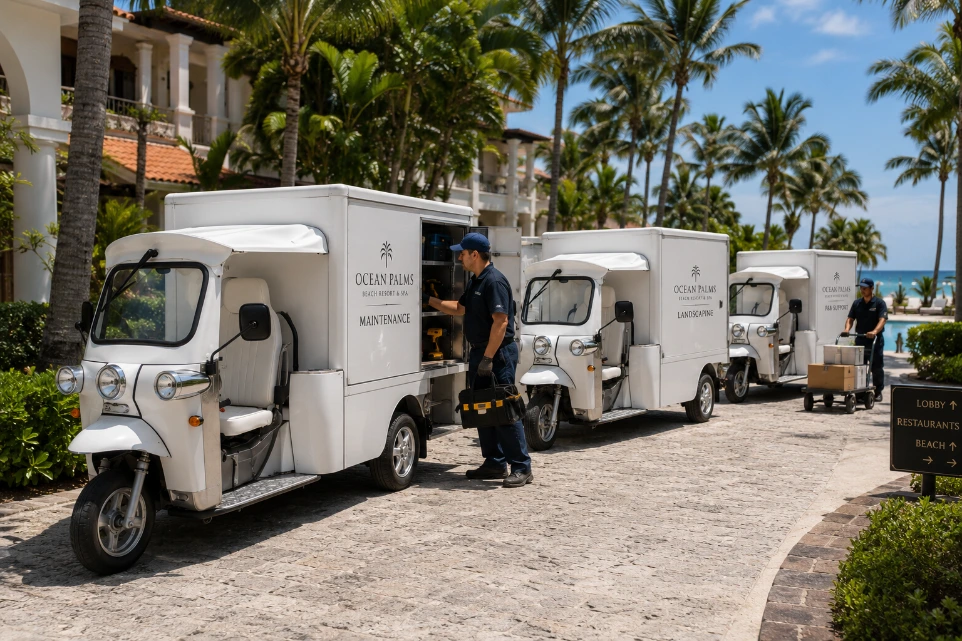
Can airports use cargo eTuks for facility operations?
A cargo eTuk may support defined tools, supplies, concessions or maintenance workflows on approved routes. Confirm payload, dimensions, enclosure, access, securement, security procedures and the exact operating environment.
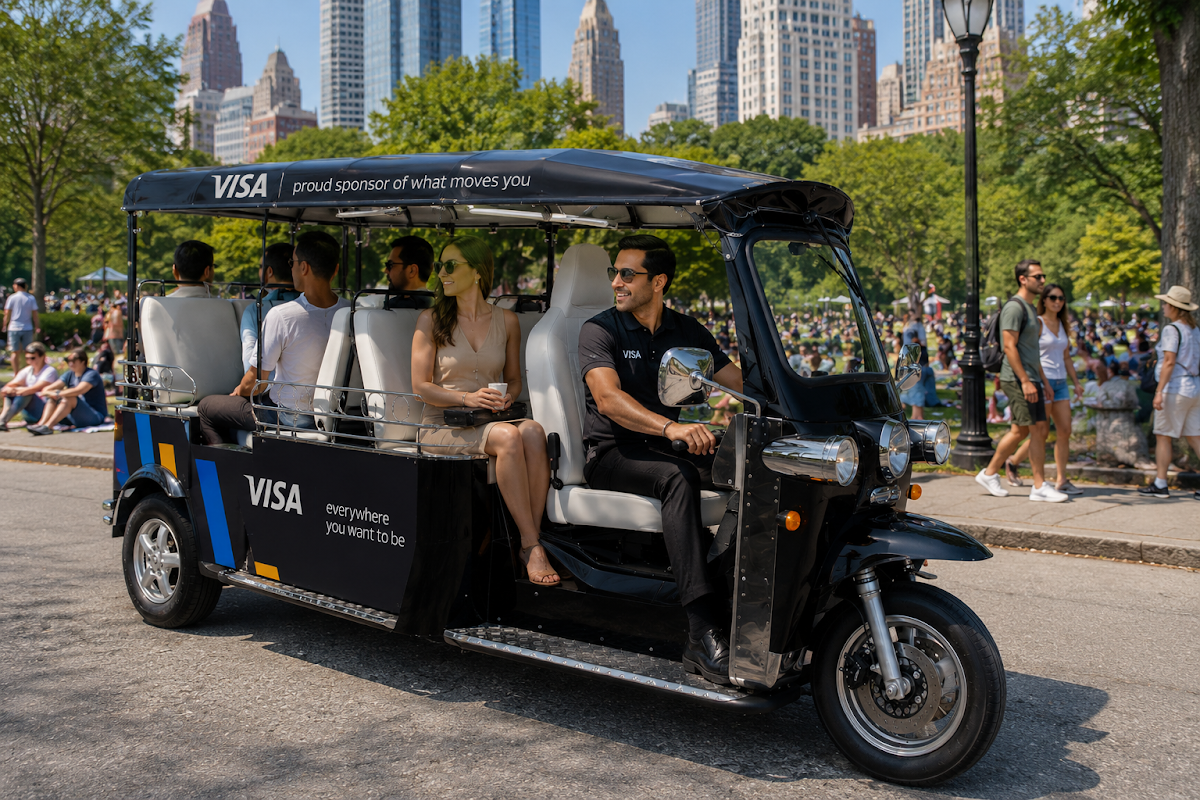
Can an airport brand an eTuk fleet?
Possible directions include approved colors, graphics, roof treatment, seating finishes and service-specific equipment. Airport brand standards, technical feasibility, availability and included items must be confirmed before production.
Where can an airport charge an eTuk?
Charging should use an approved electrical location that fits secure parking, the supplied charger, circuit requirements, service schedule, fire and facility rules and weather exposure. Confirm the exact charger and site requirements before installation.
What should an airport provide for an eTuk consultation?
Provide the airport and authority, route map, landside or controlled status, stops, security boundaries, passengers, luggage or cargo, accessibility, service hours, charging, storage, quantity, procurement process and target timing.