Skip to Content
White electric passenger eTuk supporting short-route mobility in a planned community setting

Campus mobility planning

Electric Tuk Tuks for Campus Transportation

Colleges, universities, corporate campuses, healthcare campuses and other controlled sites can use electric tuk tuks for short-route passenger circulation, parking and transit connections, visitor tours, events and property operations. The right campus plan starts with routes, rider demand, accessibility requirements, charging, staffing and operating authority.

6 passengers plus driverStreet-ready configuration17-character VIN assigned100% electric

Capacity, equipment, accessibility, route permission, registration and insurance must be confirmed for the quoted vehicle and operating location. Street-ready does not mean unrestricted public-road operation nationwide.

Direct answer

How can a campus use an electric tuk tuk?

A campus can use an electric tuk tuk to connect parking, transit stops, entrances, academic or office buildings, residence areas, healthcare facilities, event spaces and visitor destinations on planned short routes. Passenger, cargo and vending configurations should be assigned separate jobs and evaluated against the exact site.

  1. Map routes, stops, crossings, surfaces and grades.
  2. Measure rider, luggage and service demand by time period.
  3. Define accessibility and boarding requirements before purchase.
  4. Plan charging, storage, staffing and dispatch procedures.
  5. Confirm property permission and applicable vehicle rules.
Connection

Parking and Transit

Bridge verified short distances between arrival points and campus destinations.

Circulation

Buildings and Services

Support planned routes among facilities, amenities and activity centers.

Experience

Tours and Events

Create hosted transportation for visitors, admissions, programs and events.

Operations

Facilities and Support

Assign cargo or service platforms to tools, supplies and property workflows.

Campus applications

What campus jobs can an eTuk support?

Each eTuk should have a documented role. Passenger movement, facilities loads and mobile service require different configurations, schedules and operating procedures.

01 / ARRIVAL

Parking Connections

Connect approved parking areas or transit stops with entrances and defined internal destinations.

02 / CIRCULATION

Building-to-Building Routes

Plan recurring passenger movement around stops, demand, crossings, grades and service hours.

03 / VISITORS

Admissions and Tours

Provide a visible hosted experience for prospective students, families, clients or invited guests.

04 / EVENTS

Athletics and Programs

Coordinate transportation with event schedules, staging areas, parking and pedestrian traffic.

05 / STAFF

Internal Mobility

Evaluate planned movement for authorized staff between facilities and operational areas.

06 / OPERATIONS

Facilities and Supplies

Use a separately configured cargo eTuk for defined tools, supplies and maintenance loads.

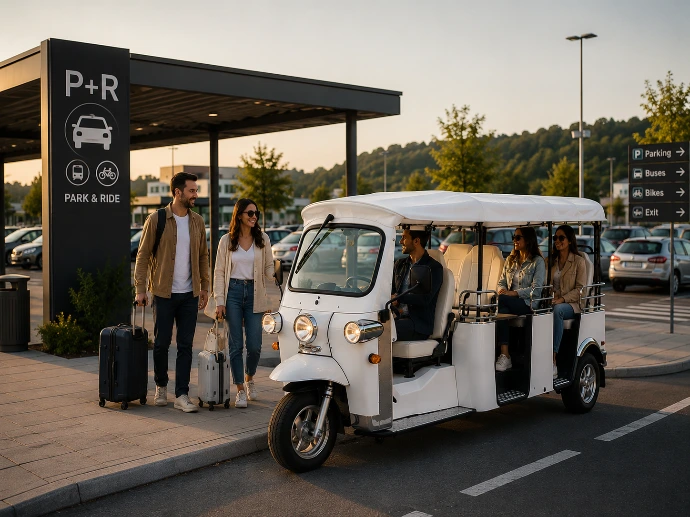
White electric passenger eTuk collecting riders at a park-and-ride connection
A campus route should connect known pickup points and destinations with a defined schedule, boarding plan and operating procedure.

Route before vehicle

Map the campus route before selecting the vehicle.

Start with a site map. Mark parking, transit stops, entrances, buildings, residence areas, healthcare facilities, event spaces, service roads, crossings, grades, surfaces, charging and secure storage. Then document ridership by hour, peak events, luggage or equipment and weather exposure.

This work determines whether one passenger eTuk is enough, where stops should be located and whether campus operations require separate cargo or vending platforms.

  • Pickup, drop-off and waiting locations
  • Route distance, grade, surface and traffic interaction
  • Rider count, boarding and accessibility requirements
  • Class changes, shifts, visits and event peaks
  • Charging windows and secure overnight storage
  • Driver, dispatch and rider communication procedures

Choose by job

Which eTuk platform fits a campus?

Passenger, cargo and vending eTuks solve different campus problems. A mixed fleet may be more effective than assigning incompatible work to one vehicle.

Passenger electric eTuk for campus parking and local connections

Passenger eTuk

For defined passenger routes, parking links, visitor tours and event circulation. Current configuration: six passengers plus one driver.

Explore Passenger eTuk →
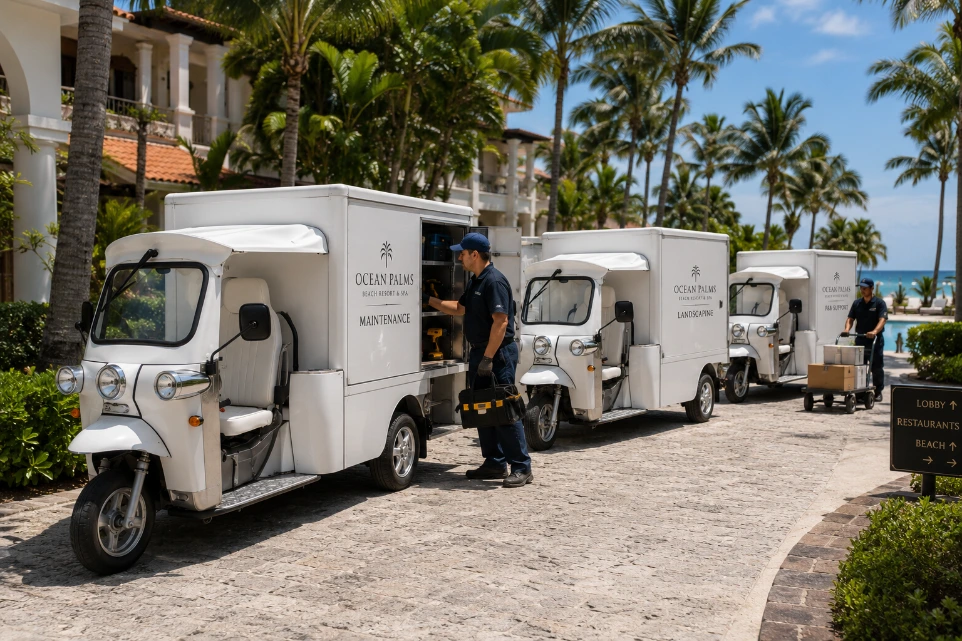
Cargo electric eTuk for campus facilities support

Cargo eTuk

For tools, supplies, grounds work and defined facilities loads. Confirm payload, enclosure, access and securement needs.

Explore Cargo eTuk →
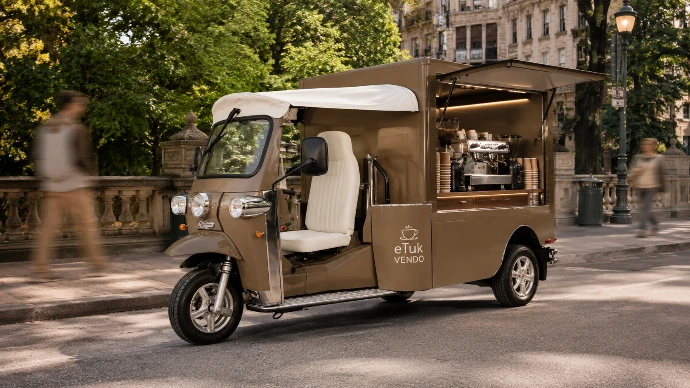
Vending electric eTuk configured for mobile coffee service on a college campus

Vending eTuk

For approved mobile food, beverage, retail or event concepts built around the menu, utilities and service workflow.

Explore Vending eTuk →

Campus project pathway

From site map to written proposal.

eTuk USA helps translate the campus use case into a vehicle and project scope. Final equipment, price, delivery and responsibilities belong in the written proposal.

  1. STEP 01

    Map

    Share the site, routes, stops, surfaces, grades, crossings, storage and charging locations.

  2. STEP 02

    Measure

    Document riders, equipment, service frequency, peaks, shift length and weather conditions.

  3. STEP 03

    Configure

    Select passenger, cargo or vending roles, then confirm equipment, finish and charging.

  4. STEP 04

    Verify

    Review authority, insurance, operating procedures, vehicle scope, freight and support in writing.

Responsible deployment

Campus transportation requires more than seat count.

The current passenger eTuk is configured for six passengers plus one driver, but operational capacity must account for delivered seating and restraints, accessibility requirements, payload, route, weather, supervision and campus policy.

RIDERS

Define Demand

Measure typical and peak ridership, trip purpose, boarding time and any accompanying equipment.

ACCESS

Plan Boarding

Document accessibility needs and verify whether the quoted configuration and stop design can serve them.

CHARGING

Protect Service Time

Match the charging location and schedule to operating hours, peak demand and required reserve.

AUTHORITY

Verify Every Route

Confirm property approval, registration, licensing, insurance and permitted roads for the exact site.

Campus eTuk FAQ

Answers for campus mobility teams.

Use these answers to qualify the site and operating plan before requesting a vehicle configuration and quote.

How many passengers can a campus eTuk carry?

The current eTuk USA passenger configuration provides seating for six passengers plus one driver (6+1). Confirm the delivered seating, restraints, payload and boarding requirements in the final vehicle specification.

Can an eTuk connect campus parking with buildings?

Potentially. Document the route, distance, crossings, grades, surfaces, traffic exposure, stops and operating hours. Confirm property authority and all registration, licensing and insurance requirements before deployment.

Is the passenger eTuk accessible?

Do not assume that a standard passenger configuration satisfies a particular accessibility requirement. Document rider and boarding needs, stop design and applicable policies, then confirm the exact quoted configuration before purchase.

Can a campus use an eTuk on public roads?

Operation depends on the exact vehicle and jurisdiction. Each vehicle is supplied street-ready with a VIN assigned, but state and local authorities determine titling, registration, licensing, insurance and permitted roads.

Where can a campus charge an eTuk?

Charging should use an approved electrical location that fits secure parking, the supplied charger, circuit requirements, service schedule and weather exposure. Confirm the exact U.S. charger and site requirements before installation.

Can a campus use a cargo eTuk for facilities work?

A cargo eTuk may support defined tools, supplies, grounds and maintenance workflows. Confirm payload, dimensions, enclosure, access, securement and the operating environment for the exact build.

Can a campus brand an eTuk?

Possible directions include approved colors, graphics, roof treatment, seating finishes and service-specific equipment. Technical feasibility, availability and included items must be confirmed in the written proposal.

What should a campus provide for an eTuk consultation?

Provide the site location, route map, public or private road status, stops, grades, surfaces, rider and load demand, accessibility requirements, service hours, charging, storage, desired quantity and target timing.

Turn the campus route into a qualified eTuk plan.

Share the site, routes, stops, rider and load demand, accessibility requirements, operating hours, charging location, vehicle roles, desired quantity and target timing. eTuk USA will help organize the next step toward a written configuration and quote.