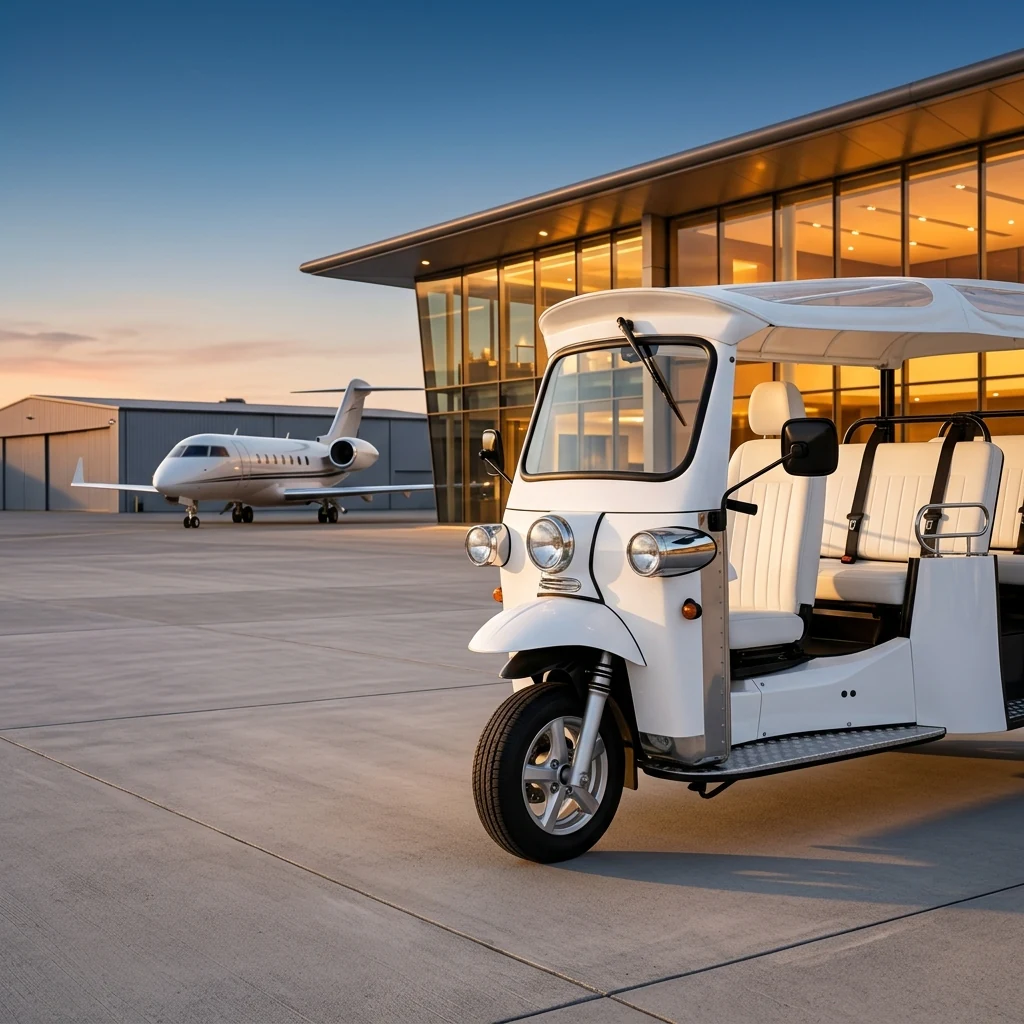
eTuk USA Aviation Mobility
The Arrival Experience Starts Before Takeoff.
Distinctive electric mobility for private aviation, FBO hospitality, and airport campuses.
Controlled-area operation is subject to airport authorization, the approved operating area, vehicle configuration, and local operational requirements.
The immediate answer
What is an eTuk aviation mobility vehicle?
An eTuk aviation mobility vehicle is a compact electric platform that may be configured for passenger hospitality, crew transportation, and approved short-distance airport-campus applications. It gives FBOs and private aviation teams a distinctive format for planned routes while keeping authorization, configuration, charging, and local operating requirements central to deployment.
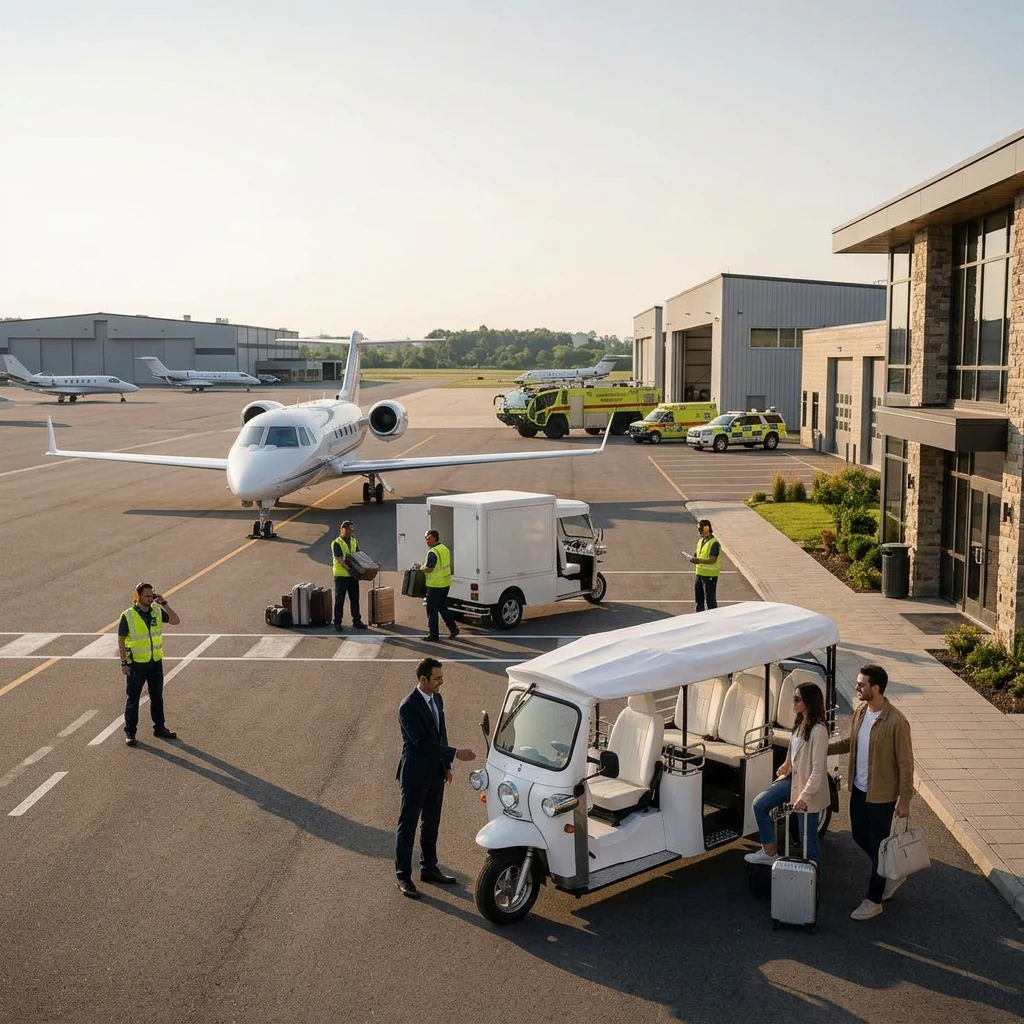
Defined routes, deliberate service
Aviation use cases built around the guest and the operation.
Use begins with the site: passenger flow, route length, road surface, grades, charging windows, operating reserve, luggage needs, and the airport's own authorization process.
VIP passenger transfers
Create a more personal movement between designated terminal, arrival, and handoff points.
Pilot and crew transportation
Support defined short-distance routes between approved campus destinations.
FBO hospitality
Extend the service experience beyond the front desk with a visible, approachable vehicle.
Terminal-to-hangar mobility
Plan repeatable transportation on authorized roads between private aviation facilities.
Aviation events
Move guests or teams within event plans where the site operator approves the vehicle and route.
Airport campus transportation
Connect hospitality and operations across a defined private aviation campus.
Controlled-area use is not universally approved. Authorization depends on the airport, operating area, delivered vehicle configuration, route, and local rules.

Passenger experience
Make the transfer feel like part of the welcome.
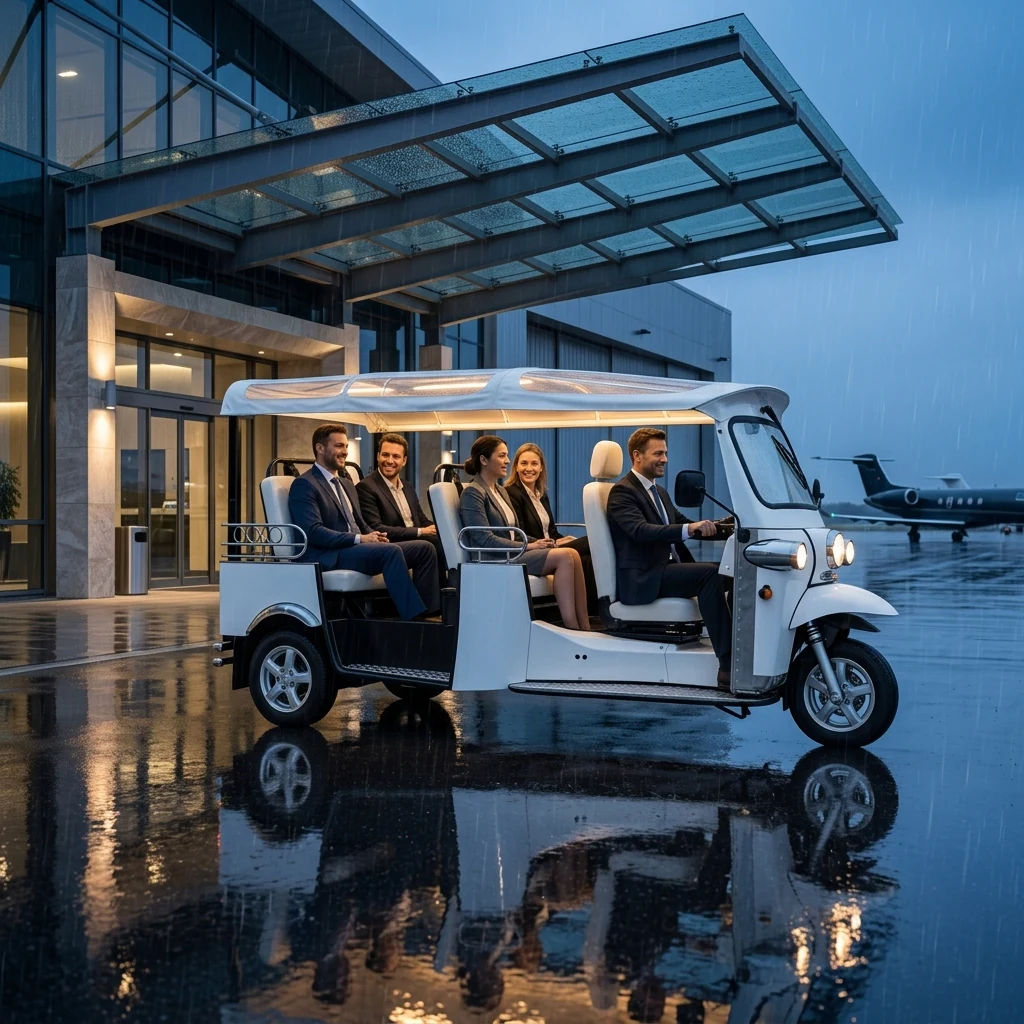
An open, visible passenger format supports personal interaction and gives guests a clear view of the campus around them. Operator colors and project-specific branding can help the vehicle feel intentional within the FBO experience.
- Open visibility
- Personal interaction
- Memorable arrival
- Operator color options
- Branding potential
- Configurable layouts
Operational fit
Useful advantages, without overpromising.
The right question is whether the route, charging windows, payload, configuration, and operating reserve fit the facility's actual day.
Electric propulsion
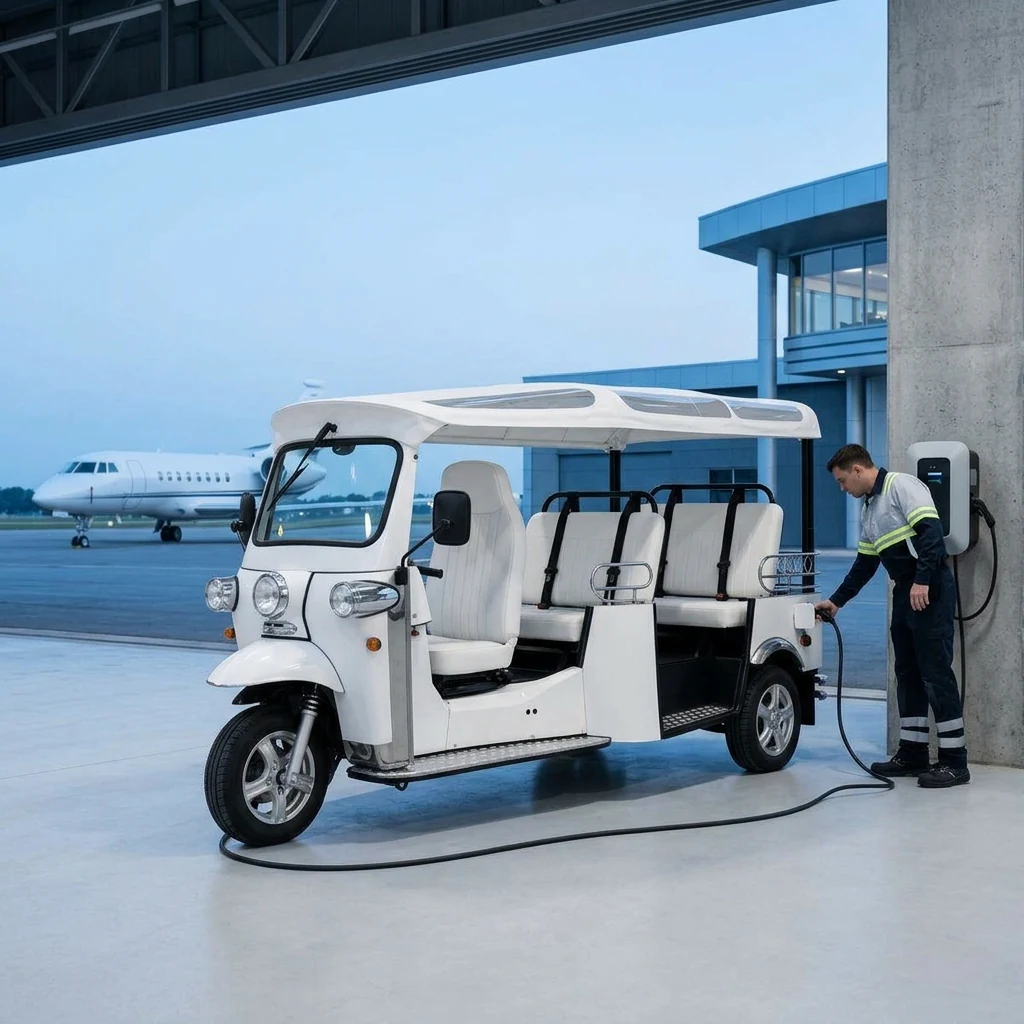
A rechargeable vehicle platform powered by a verified 15 kWh lithium-ion battery system.
Quiet operation
Supports guest-facing transportation without a combustion engine at the vehicle.
Compact footprint
A distinctive format for defined short-distance routes and planned campus movement.
Zero tailpipe emissions
No tailpipe emissions are produced by the vehicle during operation.
Rechargeable platform
Charging time depends on the charger, electrical service, battery state, ambient conditions, and final configuration.
Configurable layouts
Passenger, cargo, weather, and project-specific requirements are reviewed during planning.
Decision guide
Compare the format, then review the route.
This neutral comparison describes typical formats, not universal specifications. Final suitability depends on the exact vehicle, configuration, site, and operating plan.
| Decision factor | eTuk L5 Shuttle | Conventional golf cart | Passenger van |
|---|---|---|---|
| Guest experience | Distinctive, open, and hospitality-led | Familiar campus utility format | Enclosed, conventional road-vehicle format |
| Vehicle footprint | Compact three-wheel platform | Typically compact; varies by model | Typically larger; varies by model |
| Weather protection | Configuration-dependent roof and weather options | Configuration-dependent; often open-sided | Typically fully enclosed |
| Branding visibility | Prominent body surfaces and distinctive silhouette | Varies by body and accessories | Large exterior panels |
| Passenger interaction | High visual connection with driver and surroundings | Open interaction varies by seating layout | More separated, enclosed cabin |
| Typical use environment | Approved short-distance hospitality and campus routes | Campus, resort, and utility settings subject to local rules | Public-road and longer-distance transport, depending on vehicle |
Verified configurations
Passenger hospitality and internal logistics.
Delivered specifications, weather options, dimensions, warranty, and service support are confirmed in the proposal for the selected configuration.
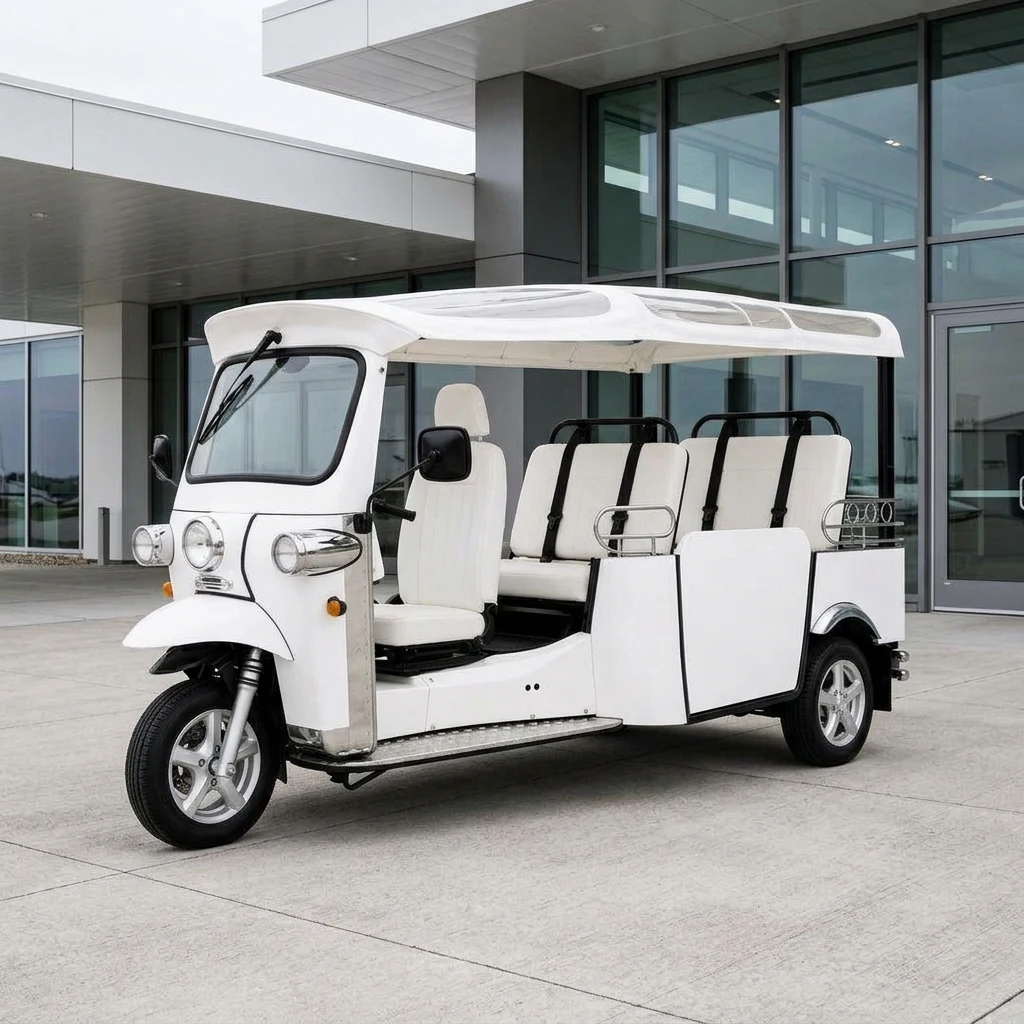
Passenger platform
eTuk L5 Shuttle
For defined passenger and crew routes in approved private aviation environments. A project-specific luggage trailer may be reviewed for compatible tow-hitch configurations.
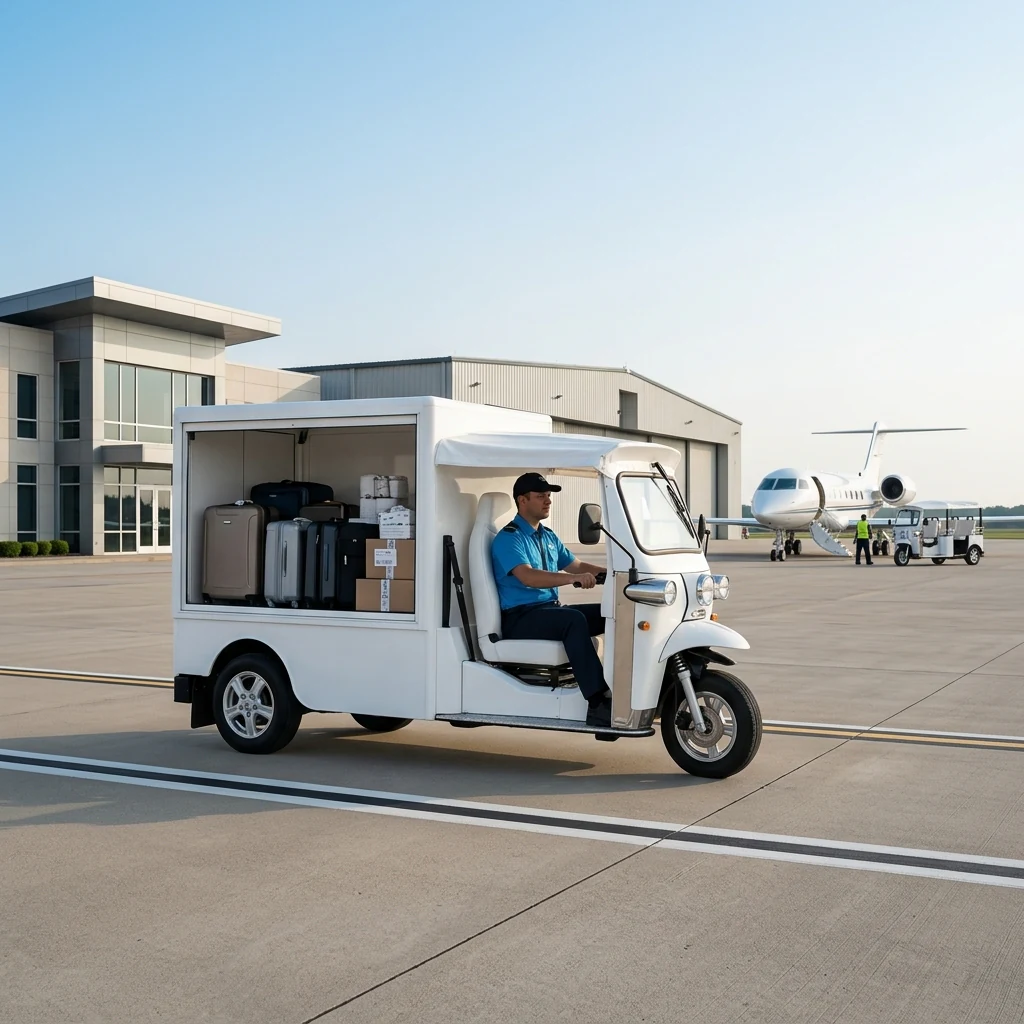
Operations platform
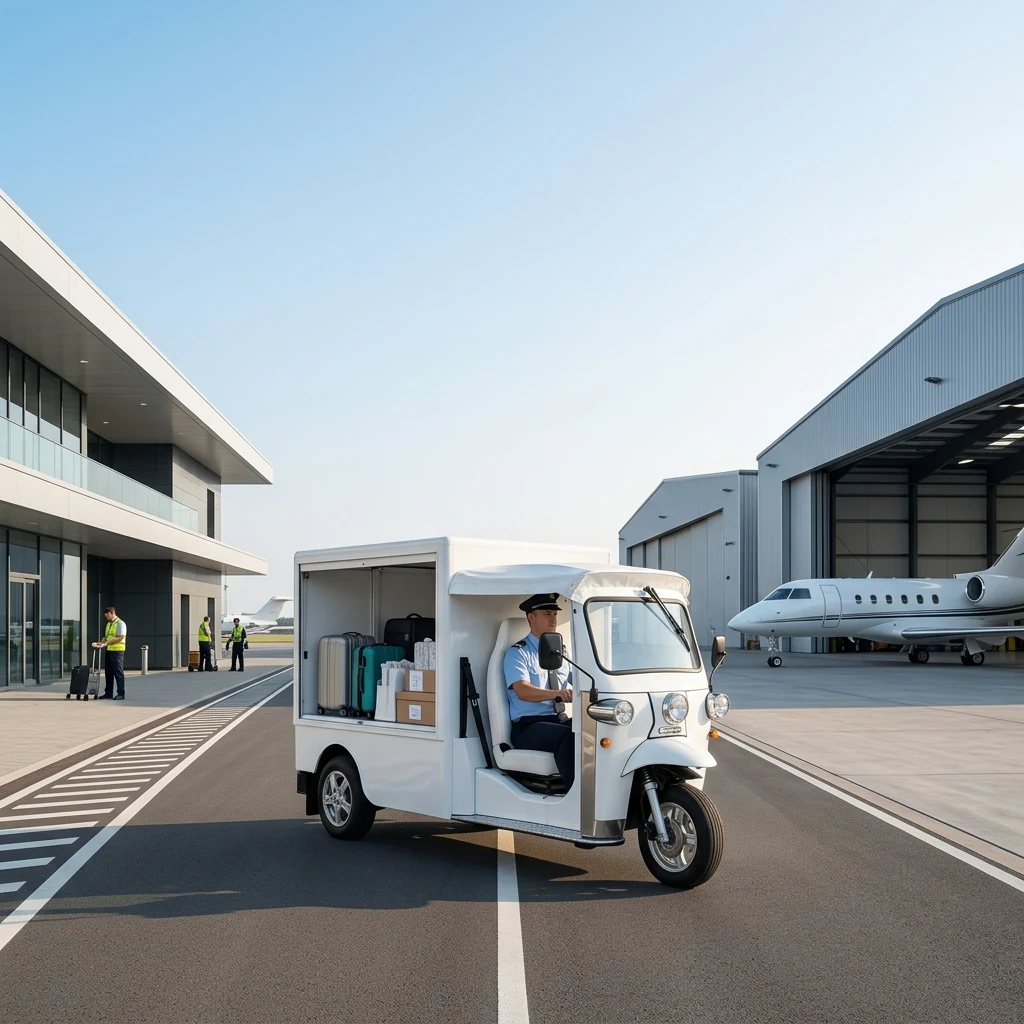
eTuk L5 Cargo
For luggage, supplies, tools, service materials, and internal logistics over defined routes using a configurable enclosed cargo body.
*“Up to 70 miles” is a planning reference, not a guaranteed result for every duty cycle. Actual range depends on configuration, passenger or cargo load, trailer use, route, speed, grades, weather, driving pattern, auxiliary electrical equipment, and battery condition.
Fleet deployment
From the operating day to the delivered fleet.
A credible deployment begins with the real route and ends with a configuration and support plan built around it.
Operational consultation
Define the passenger, crew, luggage, or logistics objective.
Use-case and site review
Review routes, surfaces, grades, authorization, and charging windows.
Configuration
Match the platform, layout, weather needs, branding, and accessories.
Proposal
Document the delivered specification, commercial terms, and open items.
Delivery and support
Coordinate delivery, orientation, parts, and service expectations.
Aviation FAQ
Clear answers before the site review.
Every project is reviewed against the operating environment. No page claim replaces airport authorization or the delivered specification.
Can an eTuk operate at an airport?
Potentially, on routes and in areas authorized by the airport or site operator. Suitability depends on the vehicle configuration, intended use, operating area, and local requirements.
Is an eTuk approved for airside use?
There is no universal airside approval implied. Authorization must be confirmed for the specific airport, area, route, configuration, and local operating rules.
How many passengers can it carry?
The verified eTuk L5 Shuttle configuration seats six passengers plus one driver. Final delivered seating and operating requirements are confirmed in the proposal.
Can the vehicle be customized for an FBO?
Operator colors, branding, weather options, and layouts may be reviewed during configuration. Feasibility and delivered details must be confirmed for the project.
How is it charged?
The L5 is a rechargeable electric platform. Charging time depends on the charger, available electrical service, battery state, ambient conditions, and final vehicle configuration.
Can we begin with a pilot vehicle?
Yes, a pilot-vehicle discussion can define the route, use case, configuration, charging plan, evaluation criteria, and support expectations before a broader deployment.
Are fleet programs available?
Fleet needs can be reviewed through an operational consultation and proposal. Vehicle count, phasing, configuration consistency, delivery, and support are confirmed for the project.
What service and parts support is available?
Service territory, parts availability, warranty terms, training, and support responsibilities should be documented in the proposal for the delivered configuration and location.
Start the route review
Design a Better Ground Experience.
Tell eTuk USA where the vehicle would operate, who it would serve, and what the day looks like. The consultation will focus on operational fit before configuration.
eTuk USA serves commercial and fleet customers in the United States. Project availability, delivery, service, and support are confirmed by location.